
In 1971, at a modest storefront in Seattle’s Pike Place Market, coffee was still largely a simple daily ritual: roasted beans sold for customers to take home, grind, and brew themselves. Decades later, millions of people around the world willingly wait in the morning lines to pay five to seven dollars for a single paper cup of coffee—not just for caffeine, but for the experience that comes with it.
Howard Schultz didn’t invent coffee, nor did he pioneer espresso. What he helped transform was the way people experienced and valued coffee. By turning an everyday beverage into part of a broader lifestyle, Starbucks demonstrated that customers aren’t paying for ingredients alone. They pay for convenience, familiarity, atmosphere, and the emotional connection associated with a recognizable brand.
This is the foundation of the Starbucks marketing strategy. The company built its global presence by combining premium positioning, customer experience, consistent branding, and emotional appeal.
For aspiring beverage startups, the lesson extends far beyond the café counter. Lowering your prices is a trap, but relying only on the taste isn’t enough when bigger brands have far more cash and scale than you do. The more important question is how to create a brand that customers remember, trust, and actively choose. Starbucks doesn’t just sell coffee. It sells an experience, and coffee is the passport.
Table of Contents
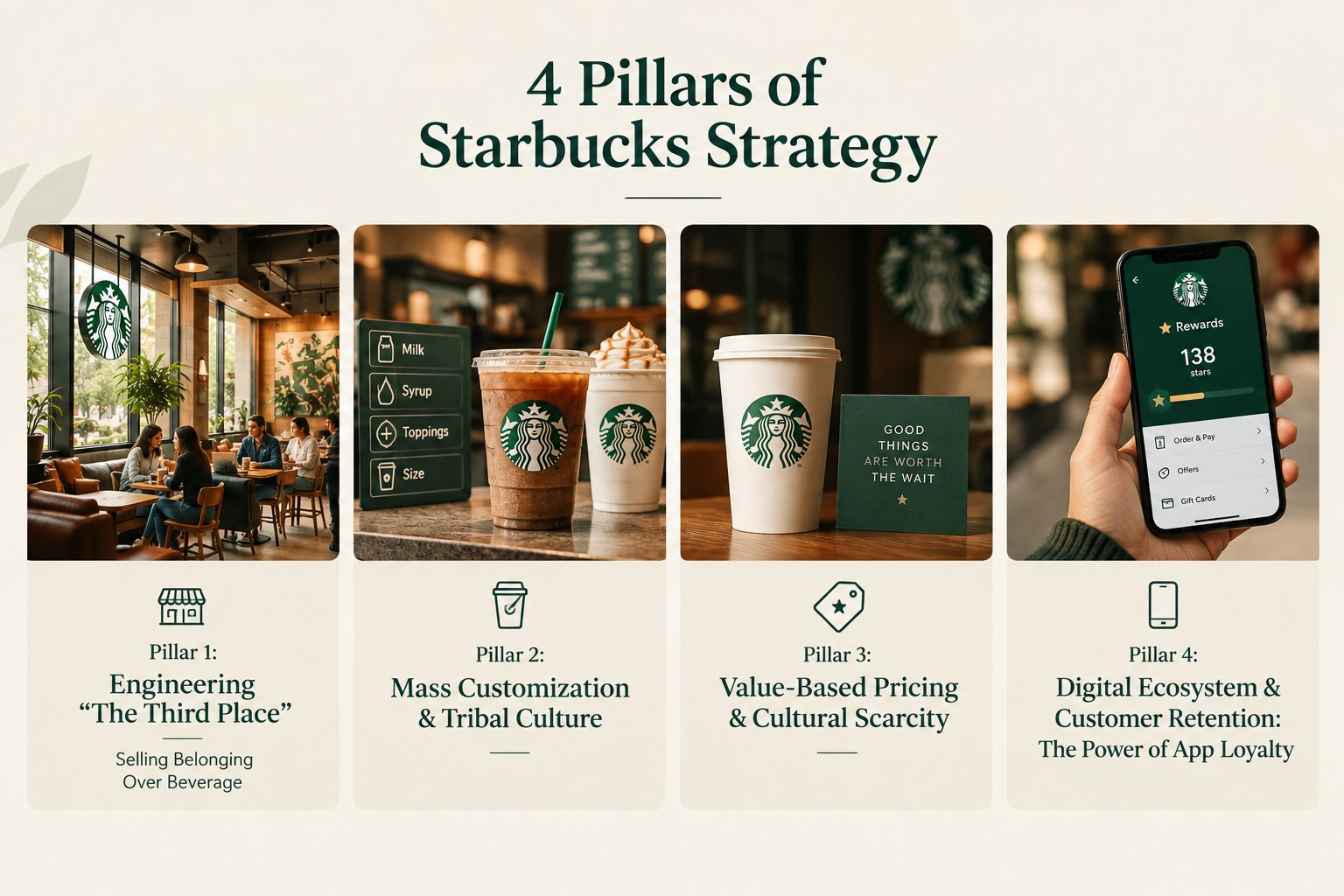
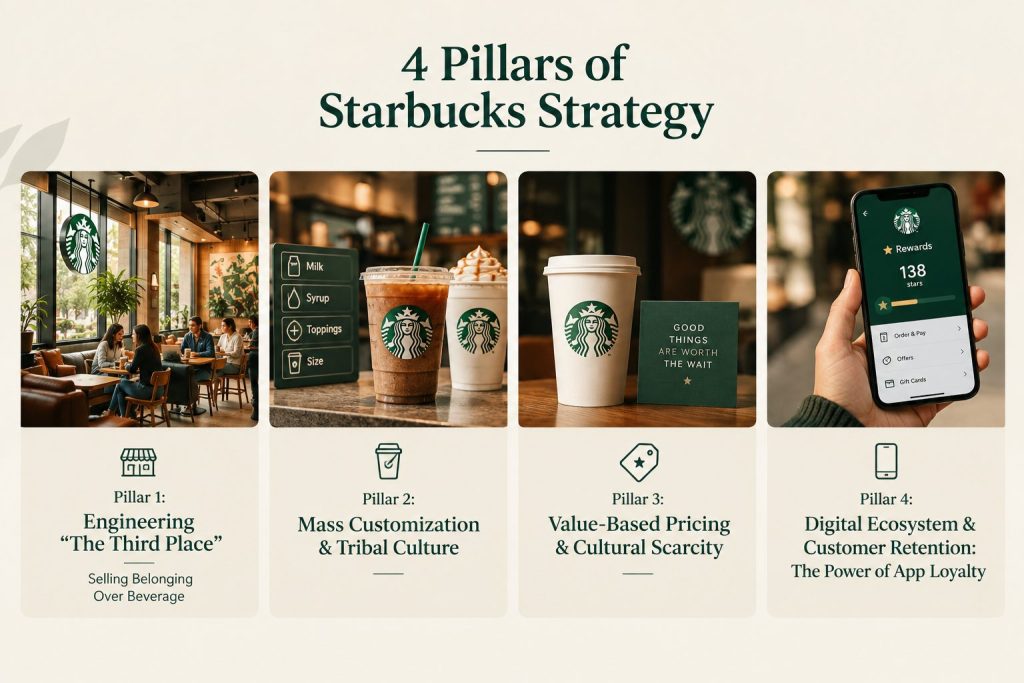
The Starbucks Marketing Strategy: 4 Pillars Behind Its Global Brand
Starbucks’ remarkable rise came from a clear and well-planned strategy. To understand what has made the brand so successful for so long, emerging merchants need to look beyond the drinks menu and examine the four key pillars that have shaped the way consumers experience and buy Starbucks coffee around the world.
Pillar 1: Engineering “The Third Place” — Selling Belonging Over Beverage
Before Howard Schultz transformed Starbucks into a cultural phenomenon, Western society pivoted around two primary anchors: Home (The First Place) and Work (The Second Place). Starbucks carved out and laid claim to The Third Place, a neutral, welcoming sanctuary where anyone could escape domestic duties and corporate pressures to recharge.
- Multi-Sensory Architecture: Every square foot of a Starbucks store is engineered to engage the senses. The rich aroma of dark roast is guarded so fiercely that employees are barred from wearing perfume or smoking. Warm 2,700K lighting creates a sense of intimacy; natural wood finishes and plush leather armchairs encourage lingering, while jazz and acoustic playlists, curated directly from headquarters, create a consistent atmosphere across stores worldwide.
- Radical Trust and the “Open-Door” Approach: Starbucks universalized accessible power outlets and high-speed Wi-Fi to transform their cafes into communal hubs. A five-dollar cup operates as a flexible day pass, granting you the right to write, study, or convene for uninterrupted hours without side-eye from staff. While the chain now strictly requires a purchase to stay, the underlying strategy remains clear: you aren’t just buying caffeine; you are renting a temporary workspace and becoming part of an aspirational community.
The Takeaway for Startups: Don’t just sell a product—sell an environment people want to spend time in. Whether it’s a cozy physical space or an engaging online hub, building a place of belonging turns an interchangeable commodity into an irreplaceable daily routine.
Pillar 2: Mass Customization & Tribal Culture
Traditional quick-service restaurants thrive on rigid standardization to accelerate ticket times. Starbucks flipped this dogma on its head: standardizing the operational backbone while maximizing individual agency at checkout.
- A Proprietary Tribal Dialect: The moment a guest approaches the register, standard sizing conventions vanish. Words like Small, Medium, and Large are replaced by an Italian-inspired taxonomy: Short, Tall, Grande, Venti. Ordering an “Iced Grande Caramel Macchiato with oat milk and two pumps of vanilla” functions as a linguistic handshake. It signals taste, insider fluency, and belonging to a distinct consumer subculture.
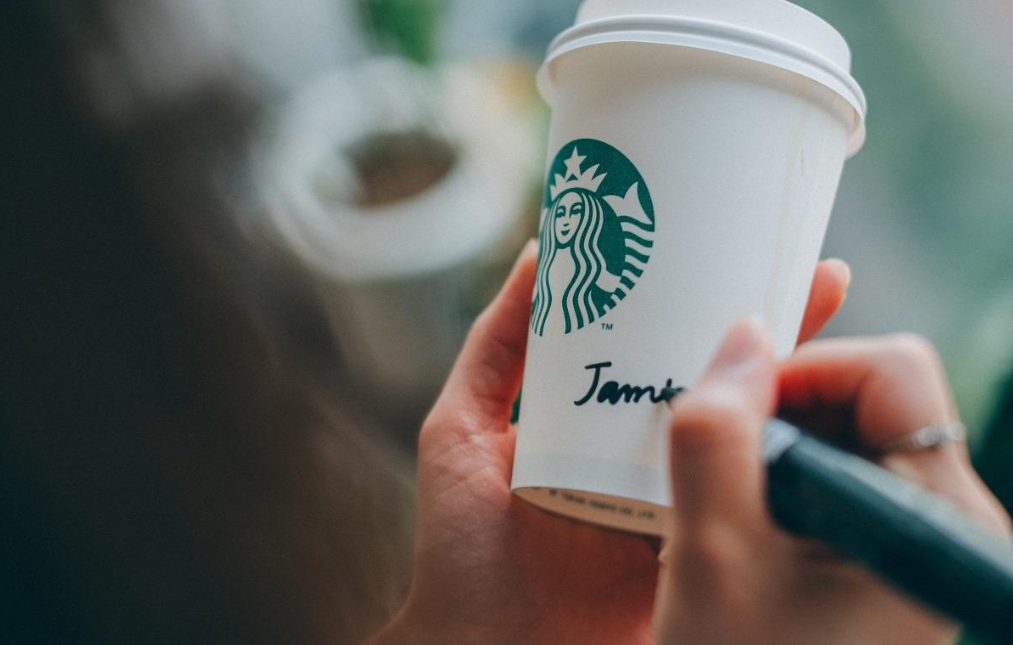
- The Sharpie Magic: Armed with a simple black Sharpie, baristas turned ordinary paper cups into personalized badges. It costs Starbucks next to nothing, but writing your name directly on the cup creates an instant human connection. Customers love sharing their labeled cups on Instagram and TikTok, giving the brand endless free advertising every morning.
The Takeaway for Startups: Standardization scales operations, but personalization wins loyalty. Small, low-cost touches—letting customers tweak their order, using their names, or crafting a distinct brand vocabulary—make people feel seen. When customers feel ownership of the product, they market it for you.
Pillar 3: Value-Based Pricing & Cultural Scarcity
Starbucks’ pricing strategy breaks away from traditional formulas, treating price as an extension of brand perception rather than ingredient math:
- Value-Based Over Cost-Plus Pricing: Most coffee shops calculate their raw costs—beans, milk, and a cup (under $1)—add a standard markup, and charge $2.50 to $3.00. Starbucks ignores this formula entirely. Instead, they charge $5 to $7 because customers aren’t paying for raw ingredients. They pay for a status symbol on their morning commute, reliable comfort, and an affordable daily self-reward. They don’t price the liquid—they price how holding the cup makes you feel.
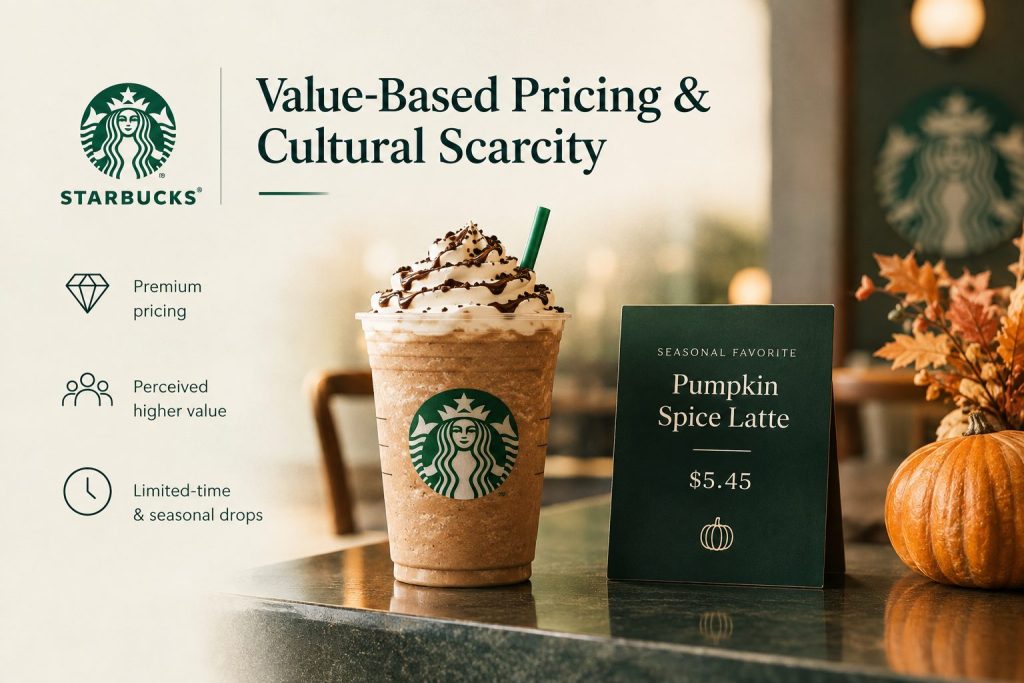
- The Seasonal Scarcity Premium: Nowhere is this pricing power clearer than in their seasonal playbook. Limited-time offerings like the Pumpkin Spice Latte (PSL) or the holiday Red Cup drinks are priced even higher than regular menu items, despite having virtually the same production cost. Because these drinks are tied to an annual cultural ritual and only available for a few short weeks, that manufactured scarcity creates intense FOMO. Customers gladly pay an extra premium without hesitation—not just for the flavor, but to be part of the moment before it’s gone.
The takeaway for startups: Price your brand on emotional value, not raw ingredient bills. When you pair an elevated brand identity with limited-time, seasonal drops, customers stop comparing your prices to standard commodity coffee—they gladly pay a premium to feel part of an exclusive experience.
Pillar 4: Digital Ecosystem & Customer Retention: The Power of App Loyalty
The first three pillars built the physical and emotional heart of Starbucks. But their digital strategy is what transformed them into a daily habit for millions.
- Driving Loyalty Through Preloaded Cards: The Starbucks Rewards program is one of the most effective retention engines in retail. Customers preload money directly into the app to earn “Stars” for free drinks and skip lines with Mobile Order & Pay. This setup gives people a reason to return every single morning. It also provides Starbucks with immense financial flexibility, holding over a billion dollars in customer balances that are spent exclusively in their stores.
- Smart, Personalized Recommendations: The app does far more than process payments; it uses data quietly behind the scenes. Based on past orders, the time of day, and even the local weather, it suggests drinks tailored to each customer. If a chilly rain starts falling on an autumn afternoon, the app can recommend a warm, seasonal drink right when someone is looking for a break.
The takeaway for startups: Great coffee brings people in once, but convenience and simple rewards bring them back all week. When you use digital tools to remove friction and reward your best buyers, you turn occasional customers into loyal regulars.
Together, these four pillars support one another:
Space pulls people in, personal touches build trust, smart pricing protects margins, and digital tools turn casual buyers into daily regulars.
For emerging coffee startups, mastering this foundation sets a lasting brand apart from a standard café.
Can a Startup Build the Next Starbucks in the Digital Age?
When people look at Starbucks today, they see a massive empire with tens of thousands of stores worldwide. It is easy to think, “I don’t have billions of dollars or prime real estate on every street corner, so how could I ever build something that big?”
Actually, you don’t have to follow their exact path.
Starbucks built its playbook in the 1980s and 90s, when opening physical doors was the only way to reach coffee drinkers. Today, the world works differently. You can borrow Starbucks’ best strategic lessons while using modern digital tools to build a loyal, high-margin coffee brand.
Here is how modern beverage founders can bridge the gap from a local counter to an online brand.
Start Small, But Think Beyond the First Café
Starbucks didn’t start with thousands of shiny glass-front stores. It started as a humble, single shop in Seattle selling roasted beans.
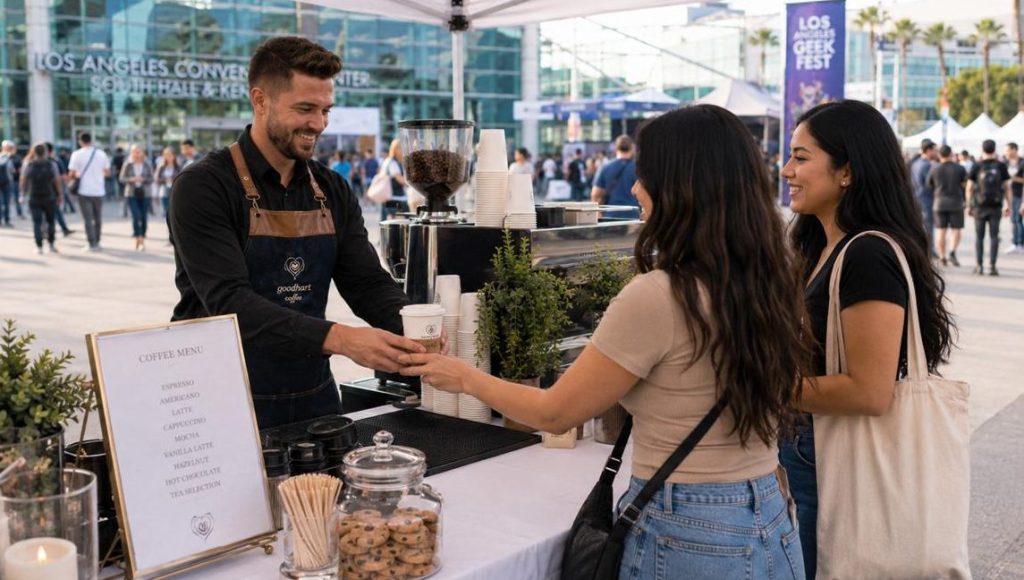
For any new coffee brand, having a physical touchpoint—whether it’s a weekend pop-up, a small mobile cart, or a cozy neighborhood café—is still the best real-world testing ground you will ever find.
Face-to-face retail lets you test things no spreadsheet can ever predict:
- Real taste reactions: You get to see people take that very first sip right in front of you. Do their eyes light up, or do they reach for extra sugar?
- Pricing comfort: You quickly see whether customers accept a $6 price tag for your signature cold brew or think twice before buying.
- The vibe and identity: You see what kind of music, packaging, and conversations make people want to stick around.
The key mindset shift is simple: The goal isn’t to build hundreds of stores. It’s to build a brand that can eventually exist beyond the store.
If you start with signing 50 expensive commercial leases, your growth will be slow, risky, and stressful. But if you treat your first counter as a testing lab to learn who loves your coffee, you are already ahead of the pack.
Even better, modern tools like simple point-of-sale systems let you collect customer emails and note their favorite drinks right at the register. Every person who buys a latte in person becomes someone you can stay in touch with online later.
Turn a Physical Experience into Scalable Brand Assets
Starbucks’ biggest advantage wasn’t simply its stores. It was the fact that the brand could make people recognize and value the experience wherever they encountered it. When you see a white cup with a green circle on someone’s desk, you don’t need to visit the shop to find out what it is. The brand lives in your head as a recognizable symbol.
To grow beyond your local block, you need to turn the feelings people get inside your space into tangible assets that travel with them:
- Packaging that stands out on a kitchen shelf: If your bag of whole-bean coffee looks generic, it gets hidden away inside a cabinet. If it has bold typography, playful illustrations, or an elevated color palette, it stays right on the kitchen counter and ends up in people’s morning Instagram stories.
- A unique name for your products: Don’t just sell “house blend” or “dark roast.” Give your blends memorable personalities and names that your customers love saying out loud.
- Simple rituals and seasonal excitement: Introduce a limited-edition roast every autumn or a signature canned cold brew every summer. When something isn’t available year-round, people look forward to it.
- Honest storytelling: Tell people where your beans come from, who grew them, and why you started this business in the first place. People fall in love with founders and missions, not faceless corporations.
Once those elements can exist outside the café, your brand is no longer tied entirely to physical locations.
At that point, someone in another city or country doesn’t need to step into your shop to feel part of your community.
The Digital Storefront: Where the Brand Meets the Customer
Once people love what you stand for, where do they go when they run out of beans at home?
This is where the website comes in.
For a modern beverage startup, the website is no longer just a place to process orders. It becomes your brand’s digital flagship café.
If your online store feels like an outdated, clunky catalog of products, you break the magic you built in person. Your digital home should feel just as welcoming, intentional, and easy to navigate as a great café counter.
A great digital coffee brand makes things intuitive for the shopper:
- Clear, appetizing visuals: Large, warm photos and short video clips of beans being ground, espresso extracting, or a smooth cold brew poured over ice.
- Helpful product discovery: Picking coffee online can be overwhelming. A quick, 3-question “Coffee Finder Quiz” that asks how they brew (French press? Drip machine? Moka pot?) and what flavors they like (chocolatey or fruity?) helps beginners pick the right bag in 30 seconds.
- Customization without confusion: Let customers pick whole bean or specify their grind size with a single tap.
- Frictionless subscriptions: Give people an easy “deliver every 2 weeks” option with a modest 10% discount, so they never wake up on a Monday morning to an empty coffee tin.
- Friendly post-purchase emails: Instead of just sending a receipt, send a welcome note with simple brewing tips so their first home cup tastes incredible.
Choosing the Right E-Commerce Platform to Power Your Brand
When you are ready to bring your coffee brand online, you will find plenty of e-commerce platforms out there. Options like WooCommerce give you deep open-source control if you like managing your own WordPress setup, while platforms like Squarespace or Wix work well for simple, brochure-style sites.
However, for beverage founders who want to build a serious, scalable online business without spending months managing servers or debugging checkout code, Shopify is often the easiest and most reliable place to start. Many of the fastest-growing modern drink brands—from specialty coffee roasters to viral canned teas—run their entire digital storefronts on it.
Think of Shopify as the ready-made counter and plumbing behind your digital coffee shop: the heavy machinery is already hooked up, so you can focus entirely on pouring great drinks and telling your story.
What makes it especially friendly for startups is its flexible foundation. You don’t have to build complex features from scratch. Instead, you pick one of the best Shopify themes for coffee shops to set the vibe and visual layout of your shop, and then install Shopify apps to handle extra features like subscriptions, quizzes, or rewards whenever you need them.
Here is how that combination helps bring your coffee brand to life:
- Visual Storytelling & Warm Themes: Selling coffee on the web is all about appetite, aroma, and mood. Instead of paying thousands of dollars for a custom web designer on day one, you can start with a drink Shopify theme like Taste, Local, or Purely. They are built specifically for food and beverage brands, offering large photo sections for your bag designs, clean space for origin stories, appealing beverage product showcase landing pages, and super smooth mobile browsing.
- Effortless Recurring Subscriptions: Coffee is consumed every single morning, making it a natural fit for repeat deliveries. Through plug-and-play apps like Appstle or Recharge, you can let shoppers choose “Deliver every 2 weeks & save 10%” right on the product page. This turns one-off buyers into predictable monthly revenue with zero manual invoicing.
- Interactive Coffee Quizzes: Specialty coffee lingo can feel intimidating to everyday drinkers. With simple quiz tools like Octane AI, you can guide curious visitors with a 30-second questionnaire (“How do you brew? Dark or fruity? Ground or whole bean?”), so they confidently buy the right bag on their first visit.
- Simple Loyalty & Community Perks: You don’t need a billion-dollar rewards system to make people feel appreciated. Lightweight tools like Smile.io let customers earn points on every purchase to redeem for free shipping, discounts, or branded mugs.
- Social Proof & Helpful Follow-ups: Since people cannot smell or taste coffee through a screen, photo reviews (via tools like Judge.me) reassure hesitant first-time buyers. Paired with automated email tools like Klaviyo, you can automatically send a quick brewing guide right after an order, followed by a friendly restock reminder two weeks later.
- Connecting Counter and Web via POS: If you run a physical coffee cart, a weekend pop-up, or a permanent café counter, Shopify’s Point of Sale (POS) system keeps everything under one roof. The customer who grabs an iced latte at your counter can easily save their email at checkout, making it simple to send them a discount on their first bag of beans online.
At the end of the day, the platform is just the engine under the hood. Great beans, distinctive packaging, and real customer care are what make people fall in love with your brand. The right platform simply ensures that the door is always open, the ordering is effortless, and the register never jams.
From Café to D2C: Beverage Brands That Scaled Beyond the Counter
You don’t have to take our word for it. Several modern coffee and beverage brands have already proven that you can take this exact playbook and turn it into a thriving business without opening 10,000 retail stores.
Blue Bottle Coffee: The Craft Specialist
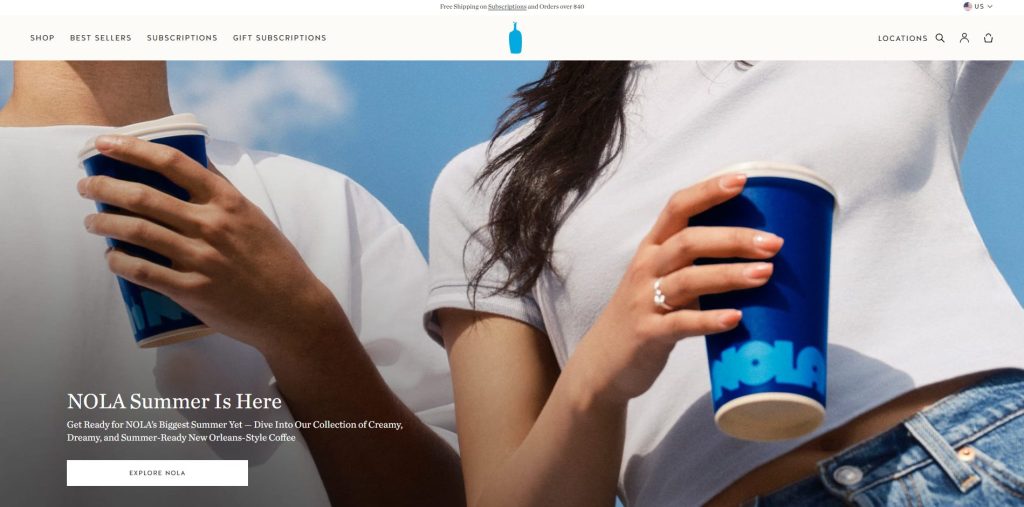
Blue Bottle started as a tiny, uncompromising specialty coffee kiosk in Oakland, California, obsessing over freshness and pour-over technique. Instead of rushing to open a store in every shopping mall, they took that same dedication to craft online.
Using their digital storefront, they built one of the most successful coffee subscription services in the world. Their site guides you by roast preference and brew method, delivering beans to your door within days of roasting. They turned specialized café knowledge into a simple, recurring ritual at home.
Death Wish Coffee: The Niche Rebel
Death Wish Coffee didn’t try to appeal to everyone. They targeted people who wanted one thing: the strongest, most caffeinated cup of coffee on earth. With bold skull-and-crossbones packaging, an unapologetic attitude, and sharp viral marketing, they stood out instantly from typical gentle, minimalist coffee brands.
Instead of needing a café on every corner, they used direct-to-consumer e-commerce to capture attention across the country, eventually leveraging that online buzz to secure shelf space in national grocery chains.
Chamberlain Coffee: The Community Favorite
Created by digital creator Emma Chamberlain, this brand proved that coffee is fundamentally about personal connection and everyday lifestyle. Rather than acting like high-brow coffee snobs, Chamberlain Coffee focused on cute, approachable packaging, colorful animal mascots, and fun merchandise like cold brew mason jars and cute mugs.
They used their online store to treat coffee drops like fashion releases. Limited seasonal flavors, bundled merch, and playful subscription perks turn everyday caffeine runs into fun, anticipated moments for their online community.
Take a look at these best Shopify coffee shop websites to see firsthand how modern roasters structure their homepages, highlight their tasting notes, and make buying beans effortless.
The New Starbucks Doesn’t Have to Look Like Starbucks
Starbucks didn’t become a household name simply by pouring coffee. They built a familiar feeling, gave people a reason to return, and turned a daily caffeine run into an emotional habit.
But today, you don’t have to follow their exact, expensive footsteps. You don’t need dozens of leases to build a lasting brand. You can start with just one counter, figure out what makes your regulars smile, and let your packaging, story, and digital storefront carry that feeling into homes everywhere.
That is the real magic of building in the digital age: you can grow a massive community without having to open a shop on every street corner.
The next Starbucks doesn’t need ten thousand physical stores. It just needs to give people a genuine reason to love your coffee, remember your name, and make you a part of their morning ritual.