
Have you been thinking about launching your own swimwear brand but feel unsure where to start? Maybe you have a few designs in mind, a clear idea of who you want to sell to, and feel that there is room for a better product.
Actually, you don’t need a retail store or a large warehouse to get started.
Starting a swimwear line from home doesn’t mean you have to sew every bikini yourself. Unless you are building a handmade or bespoke label, you can start by developing your designs, working with a low-MOQ manufacturer or POD supplier, selling through an online store, and managing inventory and fulfillment from home. The goal is to keep your upfront commitment manageable while you learn what customers actually want.
So, what does it actually take to get your first collection off the ground? In this guide, we’ll walk you through the key steps:
- Choose a swimwear niche and production model that fits your target customers and budget.
- Develop your products with the right materials, tech packs, and fit testing.
- Plan your startup budget, pricing, and break-even point before committing to inventory.
- Build a Shopify store with product pages, sizing tools, and a mobile experience swimwear shoppers need.
- Launch and market your brand through pre-orders, UGC, and targeted content.
- Manage fulfillment, returns, and customer experience as your business grows.
Table of Contents
Why Swimwear Is a Profitable Niche for a Small Business
If you’re thinking about starting a fashion business from home, you might wonder: Why swimwear? With established brands already competing for customers, is there really room for a new one?
The answer can be yes. Swimwear has several characteristics that make it an appealing niche for entrepreneurs who want to start small and grow gradually:
- Healthy profit potential. Swimwear can command a relatively high selling price compared with its size and production cost. Some industry-specific estimates place DTC swimwear gross margins at around 60–80%, although actual margins vary depending on sourcing, pricing, marketing, shipping, and returns.
- Low storage requirements. Bikinis and swimsuits are compact and lightweight, making them easier to store at home than many other fashion products. This can help keep early operating costs manageable.
- Strong visual appeal. Swimwear is naturally suited to visual marketing. High-quality photos, short-form videos, and user-generated content can showcase the product’s fit, style, and overall look across platforms such as Instagram and TikTok.
- Plenty of room for niche positioning. Instead of competing with large brands on everything, a new business can focus on a specific customer need—such as plus-size swimwear, modest designs, tummy-control styles, active swimwear, or sustainable materials.
- Flexible ways to test demand. Low-MOQ production, preorders, or made-to-order models can help you validate designs before committing to larger inventory quantities.
Together, these advantages make swimwear an interesting category for a home-based D2C business—especially if you start with a focused product range and scale based on real customer demand.
How to Start a Swimwear Line from Home (6 steps)
Step 1: Choose a Swimwear Niche and Business Model
Before developing your products, decide who you want to serve and how you’ll produce your swimwear. These choices will influence your product design, pricing, marketing, and startup costs.
Choose a Specific Sub-Niche
Avoid trying to appeal to everyone. The broad swimwear market is highly competitive, so focusing on a specific customer group or need can make it easier to differentiate your brand.
Potential niches include:
- Sustainable swimwear
- Tummy-control or sculpting swimwear
- Sports and surfwear
- Plus-size swimwear
- Modest swimwear
Practical takeaway: Choose your niche based on a specific customer need or problem you can address, not just an aesthetic you personally like.
Choose a Lean Production Model
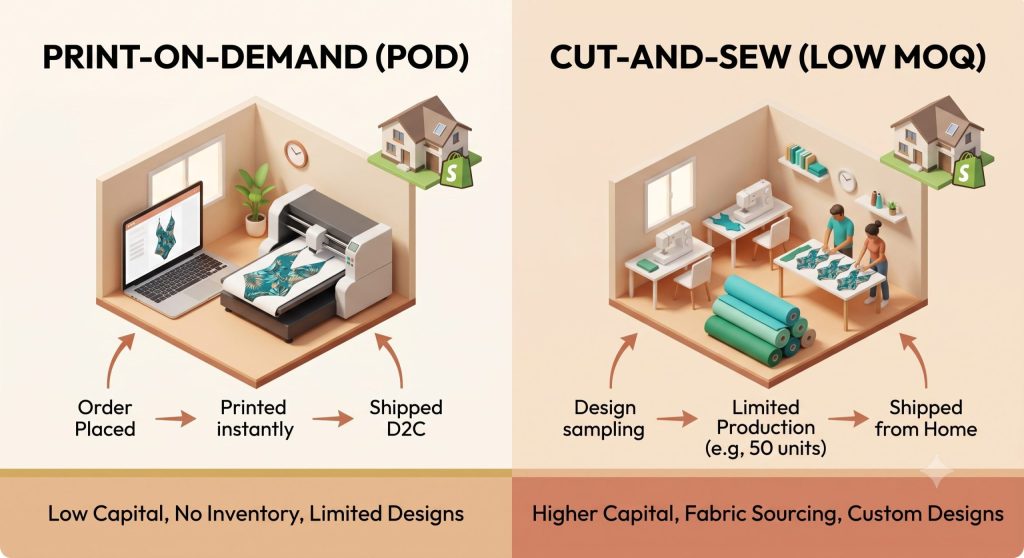
You don’t need a factory, sewing workshop, or large inventory to start a swimwear business from home. Depending on your budget, skills, and desired level of customization, you have three practical options:
| Production Model | Best For | Main Advantage | Main Trade-off |
| Print-on-Demand (POD) | Beginners testing demand | Little to no upfront inventory investment | Lower margins and limited customization |
| Low-MOQ Cut-and-Sew | Brands with custom designs | More control over fit, fabric, and branding | Higher upfront investment |
| Handmade/Made-to-Order | Small or highly customized collections | Minimal inventory and maximum control | Time-intensive and harder to scale |
- Print-on-Demand: A supplier produces the item after a customer places an order, so you don’t need to purchase a large quantity upfront. This makes POD useful for testing designs and demand with relatively low risk. The trade-off is that you usually have fewer options for custom cuts, fabrics, and construction, with lower margins than bulk production.
- Low-MOQ Cut-and-Sew: A manufacturer produces your custom swimwear in smaller batches, such as 30–50 pieces per style, depending on the supplier. This gives you much more control over the product and can offer better margins as your business grows, but requires more upfront capital.
- Handmade / Made-to-Order: If you have sewing skills, you can make the products yourself or work with a small sewing partner. This approach works well for limited, bespoke, or highly specialized collections, but production time can become a major constraint as orders increase.
Practical takeaway: Choose the production model that fits your current budget and capabilities while giving you enough flexibility to test demand before committing to larger production runs.
Step 2: Develop Your Swimwear Products
Once you know your niche and production model, turn your idea into products that are ready to sample and sell. You don’t need a professional design studio to get started. The key is to clearly define what you want, find suitable materials and production partners, and test the fit before committing to larger quantities.
Create Your Swimwear Designs
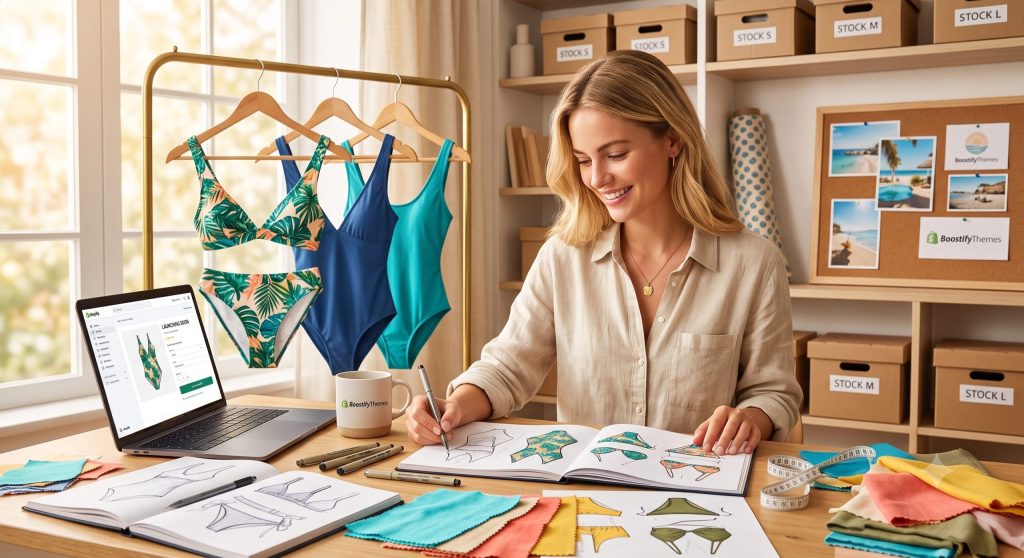
Start with a small, cohesive collection rather than launching too many styles at once. Define:
- Styles and silhouettes: bikinis, one-pieces, rash guards, or other designs
- Colors and prints: choose a focused palette that fits your brand
- Coverage and fit: consider the needs of your target customer
- Fabric requirements: stretch, support, opacity, and durability
- Branding: labels, logos, and other signature details
Your goal is to create products that solve a specific customer need while maintaining a consistent visual identity.
Create a Simple Tech Pack
A tech pack is simply a set of instructions that tells a manufacturer exactly how you want your swimwear to be made. You don’t need an advanced technical document when you’re starting out.
For a basic swimwear product, include:
- Simple sketches or reference photos showing the design
- Basic measurements and size specifications
- Fabric details or a fabric sample
- Color and print references
- Trims and accessories, such as straps, padding, hooks, or elastic
- Logo and label placement
- Special construction details, if any
A clear tech pack reduces misunderstandings and makes it easier to compare samples and communicate changes with your manufacturer.
Source Swimwear Fabric
Swimwear requires fabrics that can handle stretching, water, and repeated wear. Common choices include nylon/spandex or polyester/spandex blends, particularly fabrics with four-way stretch. Depending on your niche, you may also want to consider chlorine resistance, UV protection, colorfastness, and opacity when wet.
You don’t necessarily need to purchase fabric in large quantities. When starting with a small collection, look for:
- Fabric remnants or deadstock from local suppliers
- Local fabric markets and wholesalers
- Online fabric suppliers that offer small quantities or samples
- Manufacturers that can source fabric for you
Ordering fabric samples first can help you check stretch, recovery, thickness, color, and feel before using it for production.
Find a Manufacturer
If you aren’t making the swimwear yourself, look for a manufacturer that matches your production model and order size. Compare their MOQ, sample costs, production lead time, fabric options, customization, branding services, and quality control.
For a home-based business, a partner that can handle production, packaging, or even direct fulfillment can reduce the amount of inventory and equipment you need to manage yourself.
Order Samples and Test the Fit
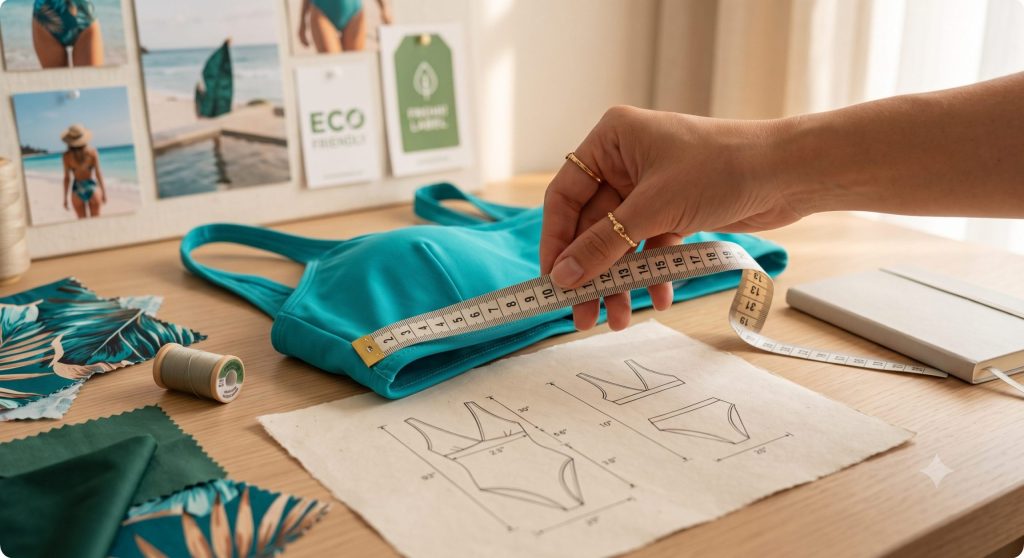
Never place a large production order based only on sketches or product specifications. Start with samples and test them on real people who represent your target customers.
You don’t need to hire expensive professional models for early fit testing. Friends or family members with different body shapes and sizes can provide useful feedback on:
- Overall fit and comfort
- Support and coverage
- Stretch and recovery
- Strap and waistband placement
- Opacity when wet
- Movement and security
Record the feedback, make adjustments, and request another sample when necessary. Once the fit and construction are right, approve the final sample before moving into production.
Practical takeaway: You don’t have to manufacture swimwear yourself to build a swimwear line from home. Your job is to define the product clearly, source suitable materials, work with the right production partner, and test the final design before scaling.
Step 3: Plan Your Budget and Pricing
Estimate Your Startup Costs
Before placing your first production order, map out the main costs involved in getting your swimwear brand off the ground. Your exact budget will depend on your production model, collection size, and marketing strategy.
| Cost Category | What It May Include |
| Product Development | Samples, pattern development, tech packs |
| Production | Fabric, manufacturing, labels, and initial inventory |
| Branding & Packaging | Logo, tags, packaging materials |
| Online Store | Shopify subscription, domain, apps |
| Marketing | Product photography, influencer seeding, ads |
| Shipping & Fulfillment | Shipping supplies, postage, fulfillment costs |
| Business Expenses | Registration, software, and other operating costs |
Now assume one swimsuit sells for $60, while its variable costs—including production, packaging, and fulfillment—total $20 per unit.
Your contribution margin is:
$60 − $20 = $40 per swimsuit
Your estimated break-even point would therefore be:
$2,200 ÷ $40 = 55 units
In this simplified example, you need to sell around 55 swimsuits to recover the initial $2,200 investment. After that, additional contribution margins can go toward ongoing expenses and profit.
This is a planning example, not a guaranteed profit forecast. Your actual break-even point will change depending on your production volume, marketing costs, shipping, returns, discounts, taxes, and other operating expenses.
Practical takeaway: Price your swimwear based on the full cost of selling it, not just the factory price. Knowing your contribution margin and break-even point will help you decide how much inventory to produce and how much you can afford to spend on marketing.
Step 4: Build Your Online Swimwear Store with Shopify
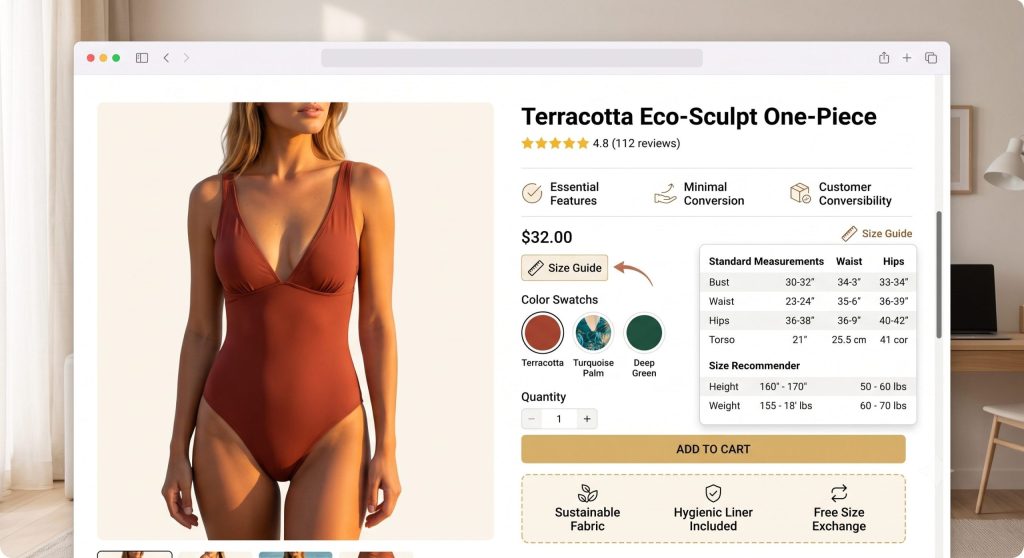
Once your products are ready, it’s time to turn them into a professional online store. Shopify lets you build and manage your storefront without needing to code, while the right theme and product-page features can make a big difference in how confidently customers shop for swimwear.
Choose a Fashion Shopify Theme
A swimwear store needs more than a basic product catalog. Since customers often discover swimwear through Instagram, TikTok, and other visual channels, your store should make your products look appealing while helping shoppers understand fit, quality, and style.
For brands that prefer a clean, minimal storefront, the Neat minimal Shopify theme is a strong option. Its simple design puts the focus on product photography while supporting media-rich product pages, flexible content sections, and a mobile-friendly shopping experience.
When comparing themes, look for:
- Visual-first layouts for large product and lifestyle images
- Video support to show products in motion
- Color swatches for different variants
- Size guide support for fit information
- Mobile-friendly navigation for social-media traffic
- Fast-loading pages to reduce friction on mobile devices
Add Your Products and Build Better Product Pages
Start by adding your products in Shopify Admin → Products → Add product. Add the product title, description, images and videos, price, size and color variants, inventory information, and other relevant details.
Once your products are added, customize the product template through Online Store → Themes → Customize. Keep essential information such as the product name, price, variants, size selection, and Add to Cart button easy to find. Read more about these Shopify product page trust signals.
For more detailed product information, you can use Boostify Sections to add customizable sections and blocks directly through Shopify’s Theme Editor without coding. Consider adding:
- Model measurements and the size worn
- Fabric composition, stretch, and coverage
- Product features such as tummy control or adjustable straps
- Care instructions
- Additional lifestyle images and videos
- Customer reviews and testimonials
- Shipping and return information
You can also use a dedicated Shopify size chart app if your theme or current setup doesn’t provide enough flexibility.
Set Up Must-Have Features for Swimwear
Swimwear shoppers often need more information before they feel comfortable clicking Buy. Build your store around the questions they are most likely to ask.
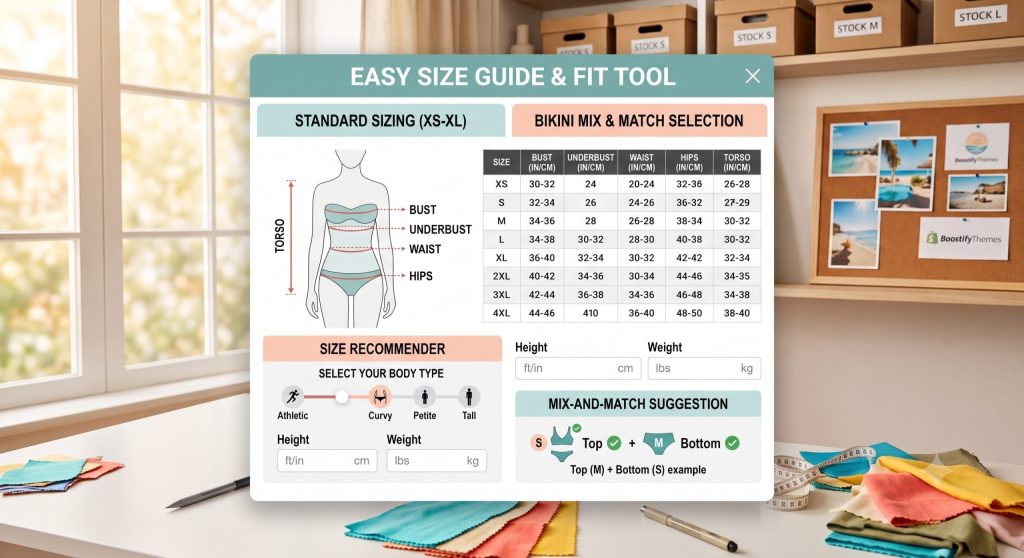
1. Provide a detailed Size Guide
Sizing is one of the biggest purchase barriers for swimwear. Show measurements clearly and explain how customers should measure themselves. Where possible, include model measurements, the size worn, fit notes, and guidance for customers between sizes.
A clear size guide can help customers choose more confidently and reduce avoidable returns and exchanges.
2. Use High-Quality Visuals
Don’t rely on one product photo. Show the swimsuit from multiple angles and use close-ups to demonstrate:
- Fabric texture and thickness
- Stitching and construction
- Coverage and support
- Straps, padding, and other details
- How the swimsuit fits on different body shapes
Lifestyle images and short videos can also help customers understand how the product looks and moves in real-world situations.
3. Offer Fast Customer Support
Customers may have detailed questions about sizing, fit, coverage, or fabric before purchasing. Add a live chat or chatbot so they can get quick answers without leaving the product page.
Keep common answers easily accessible, especially for size selection, shipping, returns, and product care.
4. Make Mobile Shopping Easy
A large portion of your traffic may come from social media, so test your store on mobile before launch. Make sure images load quickly, size and color selection is easy, product information is readable, and the Add to Cart button is easy to find.
Practical takeaway: A good swimwear store should do more than display products. It should answer the customer’s biggest questions—Will it fit me? What does it actually look like? What is it made of? And what happens if I need help?—before they reach checkout.
BONUS: You can find some outstanding swimwear stores to learn from in the article 30+ best Shopify clothing stores for inspiration.
Step 5: Launch and Market Your Swimwear Brand
Don’t wait until your store is live to start marketing. For a new swimwear brand, building awareness and trust before launch can help you create an initial audience instead of starting from zero.
Build Demand Before You Launch
Start sharing your brand journey while you’re still developing your products. Behind-the-scenes content can make your brand feel more authentic and give potential customers a reason to follow along.
You can share:
- Choosing fabrics and colors
- Sketching or developing new designs
- Receiving and testing samples
- Fit testing and making product adjustments
- Preparing packaging and your online store
- Introducing the people behind the brand
Use this content to build a waitlist, email list, or social-media community before your official launch. Early engagement, feedback, and sign-ups can also help you identify which products or designs generate the most interest.
Use UGC and Micro-Influencers
You don’t need a large influencer budget to promote a new swimwear brand. Work with smaller creators whose audiences match your niche, such as travel, fitness, beach lifestyle, or body-confidence creators.
Focus on authentic content that shows:
- How the swimsuit fits and moves
- Coverage and support
- How it looks on different body types
- Real-life settings such as beaches, pools, or vacations
With permission, repurpose strong UGC across your product pages, Instagram, TikTok, and paid ads.
Focus on One Clear Selling Point
Give your marketing a simple message that customers can remember. For example:
- “Swimwear that stays in place.”
- “Flattering support without sacrificing comfort.”
- “UV-protective swimwear for active days.”
Test different messages and content angles before investing heavily in advertising or expanding your product range.
Practical takeaway: Start building your audience before launch, show the real process behind your brand, and use authentic customer and creator content to build trust. Let early engagement and sales data guide where you invest next.
Step 6: Manage Orders, Returns, and Customer Experience
Once your first orders start coming in, a simple and reliable fulfillment process becomes essential. The good news is that swimwear is small and lightweight, so you can manage early orders from home without a dedicated warehouse.
Create a Simple Order Fulfillment Process
Set up a small packing station at home with your shipping supplies, labels, printer, and basic inventory organized by SKU. Keep frequently ordered products within easy reach and separate sizes and colors clearly.
For each order:
- Confirm the order and inventory in Shopify.
- Pick the correct SKU, size, and color.
- Check the product for defects before packing.
- Add care instructions and a thank-you card.
- Pack and label the order securely.
- Ship it with tracking and update the order status.
As your order volume grows, connect Shopify with your preferred shipping carrier or shipping app to automate shipping labels, tracking information, and customer notifications where available. This can save considerable time compared with creating each shipment manually.
Make Packaging Practical and Brand-Appropriate
Swimwear is small and lightweight, so you don’t need bulky packaging or much storage space at home. Choose packaging that is compact, lightweight, and practical, while still creating a positive unboxing experience.
Depending on your products and market, consider including:
- A resealable or water-resistant outer package
- Care instructions
- A branded tag or card
- A hygienic liner or protective seal where appropriate
- A simple thank-you card
Keep your packaging consistent with your brand, but don’t let elaborate packaging add unnecessary shipping costs or take up valuable storage space.
Set a Clear Swimwear Return Policy
Swimwear requires a more specific return policy because of hygiene considerations. Before customers purchase, clearly explain:
- Which products are eligible for returns or exchanges
- Whether you offer size exchanges and under what conditions
- Those items must be unworn and in their original condition
- Whether hygiene seals, protective liners, tags, and original packaging must remain intact
- How customers should request a return or exchange
- Who covers return shipping, where applicable
For example, you may choose to allow size exchanges for unworn items, while refusing returns or exchanges once a hygiene seal or protective liner has been removed. However, your policy should comply with consumer protection and return requirements that apply to your target market.
Make the policy easy to find on product pages, your footer, and before checkout, so customers know what to expect.
Practical takeaway: Keep your home-based operation simple. A small, organized packing station, clear inventory system, lightweight packaging, and a transparent swimwear return policy can help you deliver a professional customer experience without needing a warehouse.
Conclusion: Start Small, Validate Demand, and Scale Carefully
Starting a swimwear line from home doesn’t mean avoiding investment—it means reducing unnecessary overhead while keeping your initial commitment manageable. You don’t need a retail store, warehouse, or large production run to test your idea.
Start with a focused niche, a small collection, and a production model that fits your budget. Test your products with real customers, pay attention to feedback, and use early sales data to understand what works before investing more.
As demand grows, you can gradually expand your sizes, colors, styles, and product categories rather than taking on too much inventory too early.
With the right product strategy and a well-structured Shopify store, even a small home-based collection can grow into a professional direct-to-consumer swimwear brand.
The goal is simple: start lean, learn from real customers, and scale when the demand is there.