
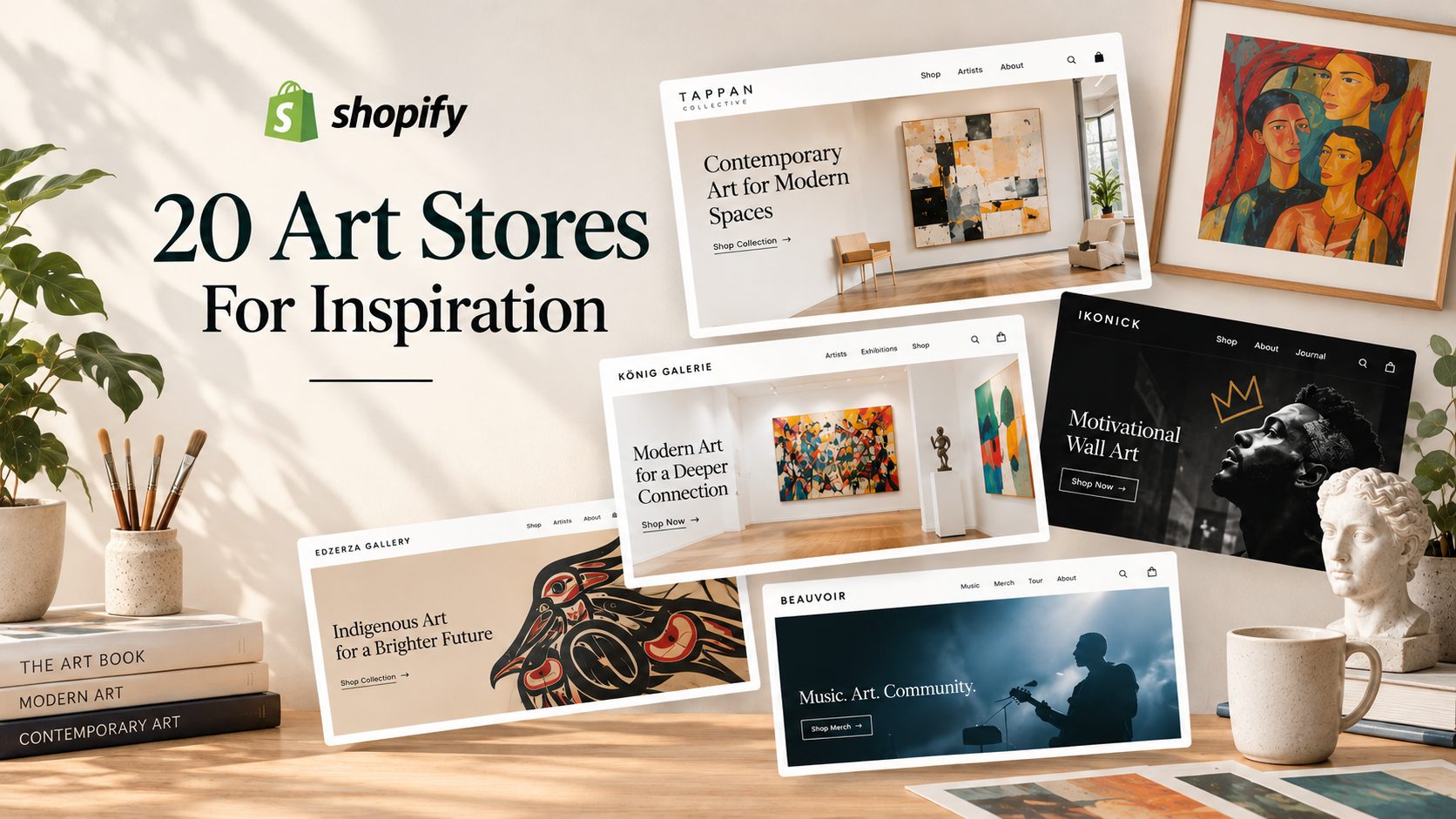
Looking for inspiration to build your own art store on Shopify? Exploring successful Shopify art stores can help you discover creative ways to showcase artwork, tell your artistic story, and turn visitors into customers.
From fine art galleries and independent illustrators to photography portfolios and artist merchandise stores, these examples highlight different approaches to building a distinctive online presence. Whether you’re an established artist or just starting your creative business, you’ll find practical design ideas and e-commerce features to inspire your own storefront.
Let’s explore some of the most inspiring Shopify art stores and see what makes each one stand out.
Table of Contents
20+ Best Shopify Art Stores to Inspire Your Own
Looking at successful Shopify art stores is a great way to discover new ideas for presenting artwork, building a recognizable brand, and creating an engaging shopping experience. From curated fine art galleries to independent illustrators and photography stores, each website offers a different approach to selling creative work online.
We’ve organized these examples into five categories to help you find inspiration relevant to your art business. As you explore each store, pay attention to its visual presentation, product organization, storytelling, and the features that make the shopping experience distinctive.
Fine Art & Painting Shopify Stores
Fine art stores need to do more than display beautiful images. They must also communicate the value of each piece, introduce the artists behind the work, and help buyers make informed purchasing decisions. These examples demonstrate different approaches to presenting and selling fine art online.
1. UGallery
Website: UGallery
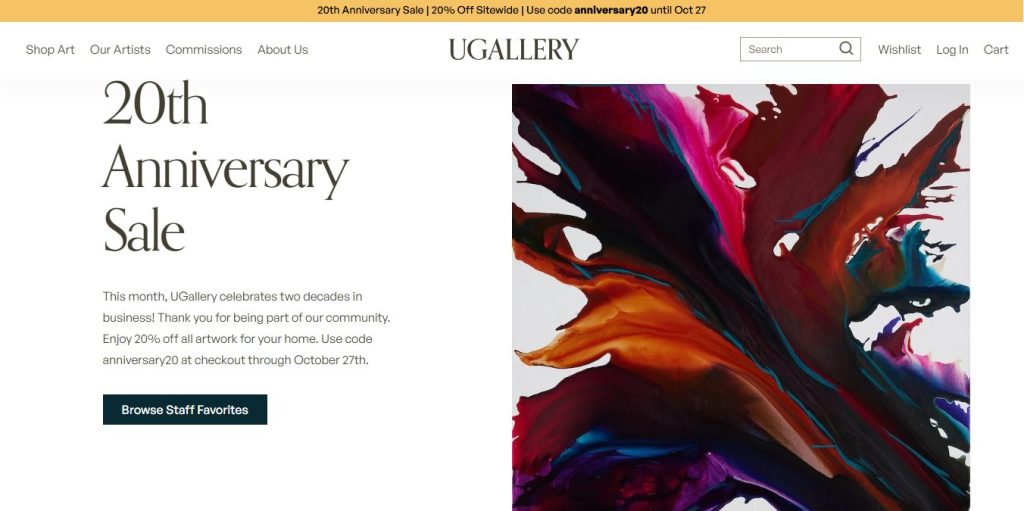
UGallery is an online art gallery featuring original paintings, photography, and other forms of artwork. Its curated approach helps visitors discover work from different artists without having to navigate individual artist websites.
The platform offers inspiration for businesses that want to create a gallery-like shopping experience. Instead of treating every artwork as an isolated product, an art store can organize pieces into collections and help visitors explore artists whose styles match their interests.
What makes it inspiring: Make artwork discovery a central part of your store experience. Organize pieces by artistic style, medium, subject, or artist to help visitors find work that resonates with them.
2. Tappan Collective
Website: Tappan Collective
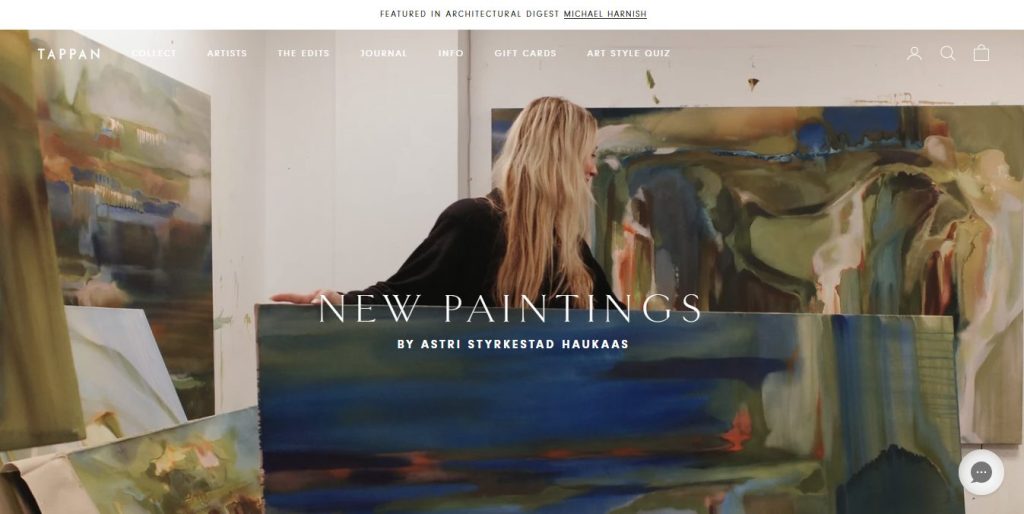
Tappan Collective connects art enthusiasts with contemporary artists through a curated collection of original artwork, prints, and other creative works. Its approach combines art discovery with a shopping experience designed for people interested in collecting contemporary art.
The store provides inspiration for brands that want to establish a distinctive artistic identity while making individual works accessible to online buyers. Artist profiles and contextual information can help visitors understand the people and creative ideas behind the pieces.
What makes it inspiring: Give artists and their work a clear identity. Include artist biographies, creative backgrounds, and relevant details about each piece to help customers connect with the artwork before making a purchase.
3. Exhibition A
Website: Exhibition A
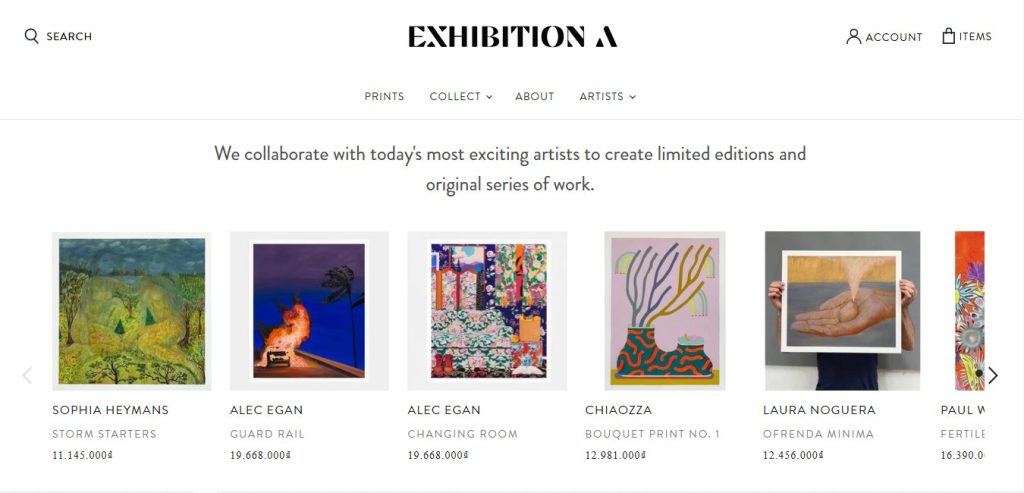
Exhibition A focuses on contemporary art and limited-edition works created in collaboration with artists. Its concept offers an interesting example of how an online store can connect art discovery with collectible products.
For businesses selling limited-edition prints or collaborations, this model highlights the importance of presenting each collection as more than a group of product listings. The story behind an artist, series, or collaboration can become an important part of the shopping experience.
What makes it inspiring: If you sell limited-edition artwork, clearly communicate the artist’s name, edition details, and the story behind the collection. These details help customers understand what distinguishes a particular piece from other prints.
4. KÖNIG GALERIE
Website: KÖNIG GALERIE
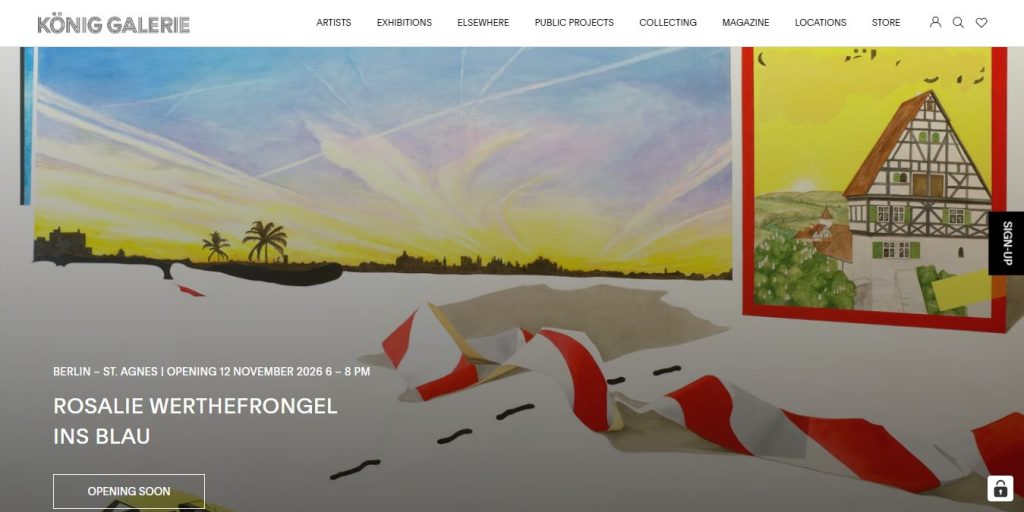
KÖNIG GALERIE is a contemporary art gallery that showcases artists and exhibitions alongside its art-related offerings. It illustrates how an art-focused website can combine commercial content with information about the broader artistic program.
This approach is particularly relevant to galleries that want their online presence to reflect their identity beyond product sales. Exhibition information, artist profiles, and editorial content can give visitors additional reasons to explore the website.
What makes it inspiring: Combine your product catalog with content about exhibitions, artists, and creative projects. This helps establish your store as a destination for discovering art, rather than simply a place to purchase it.
5. Edzerza Gallery
Website: Edzerza Gallery
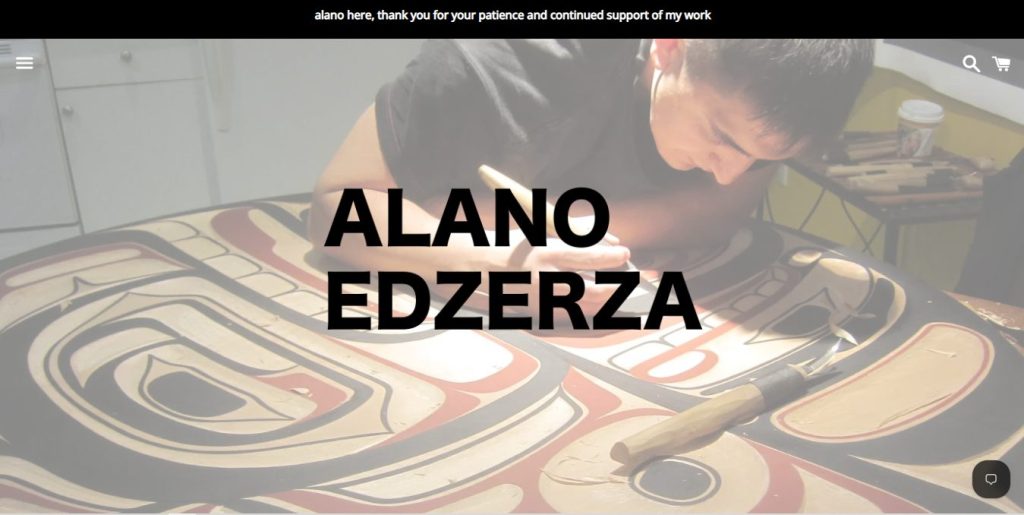
Edzerza Gallery provides another perspective on selling art online, particularly artwork connected to Indigenous cultures and artistic traditions. It offers an opportunity to explore how cultural context can contribute to the way artworks are presented and understood.
For art businesses working with culturally significant pieces, the website experience should communicate relevant information respectfully and accurately. Details about the artist, artistic tradition, and the work itself can help visitors appreciate more than its visual appearance.
What makes it inspiring: Give meaningful context to the artwork you sell. Where relevant and supported by reliable information, explain its origins, artistic techniques, and cultural significance to help customers understand the work more deeply.
Art Prints & Poster Shopify Stores
Art prints and posters appeal to customers looking for accessible ways to bring artwork into their homes, offices, or creative spaces. Successful stores in this category need to make browsing easy while helping customers understand the available sizes, formats, and display options.
6. IKONICK
Website: IKONICK
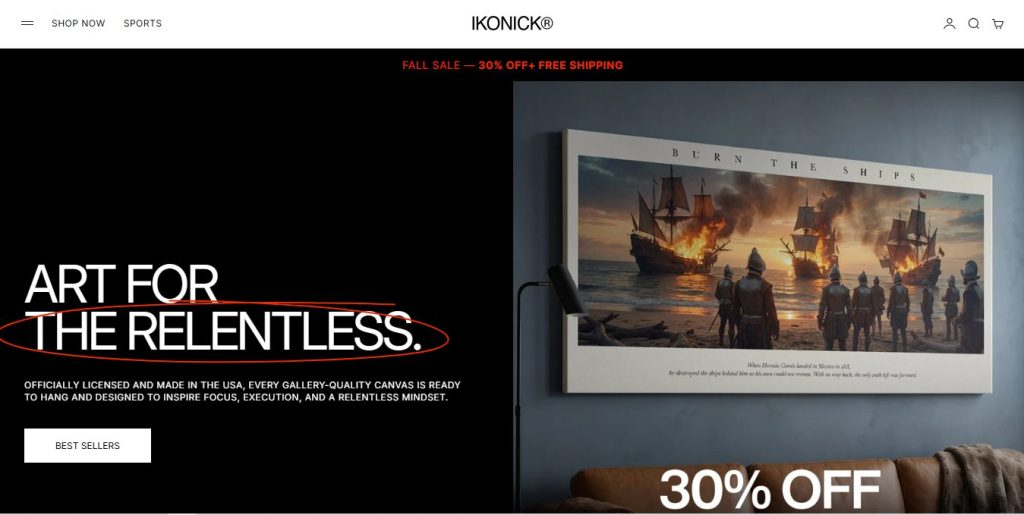
IKONICK sells motivational and pop-culture-inspired wall art, including canvas pieces built around themes such as sports, achievement, and personal motivation.
Its product concept demonstrates how artwork can appeal to clearly defined audiences through recognizable subjects and messages. Rather than organizing a store exclusively around artistic mediums, businesses can also use themes and customer interests to shape their collections.
What makes it inspiring: Organize your artwork around subjects or interests your audience cares about. Clear collection categories can make it easier for customers to discover relevant pieces and explore related products.
7. Print Collection
Website: Print Collection
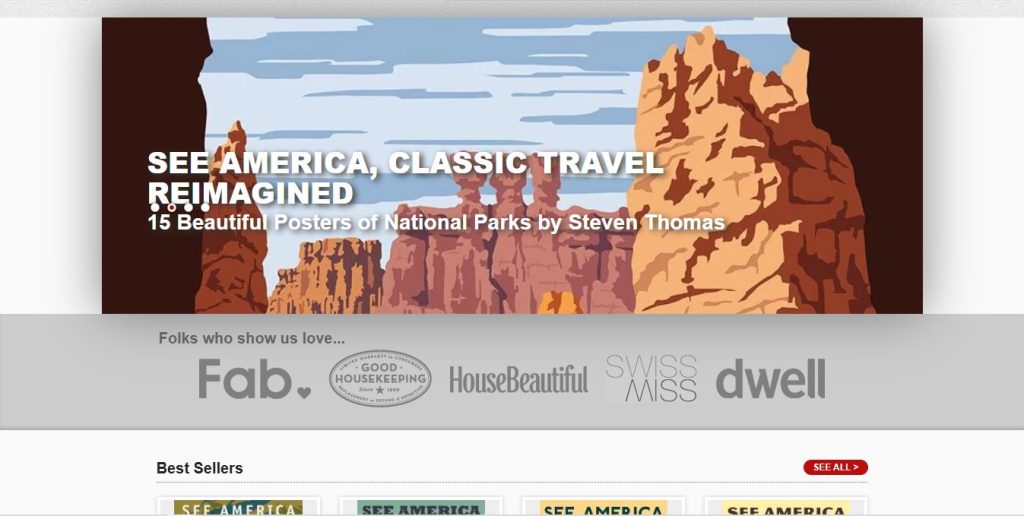
Print Collection is a candidate to explore for inspiration on building a store around art prints and posters. This type of business benefits from a product catalog that allows customers to browse artwork by subject, style, collection, or intended use.
For print-focused stores, the challenge is to help visitors navigate a potentially large selection without making the experience overwhelming. Consistent product photography and clear descriptions also help customers understand what they are purchasing.
What makes it inspiring: Create a logical collection structure and maintain consistent product presentation. If customers can quickly compare different artworks and understand the available formats, browsing becomes more straightforward.
8. Sunny Beast
Website: Sunny Beast
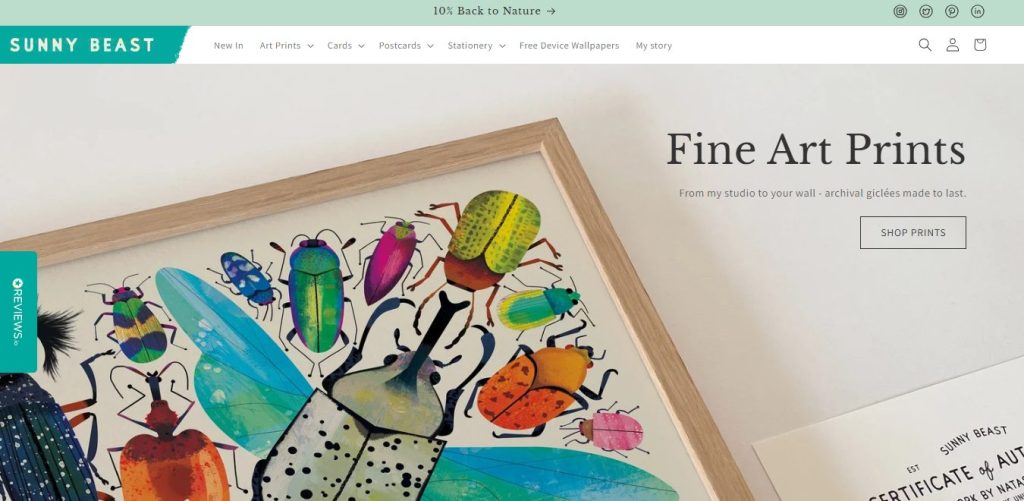
Sunny Beast is associated with nature-inspired illustration and creative products. Its concept offers inspiration for artists who want to extend their illustrations beyond traditional prints.
Illustration-led brands can build a cohesive product range by applying a recognizable visual style across different formats. Art prints, stationery, and small gifts can appeal to different customer needs while maintaining a consistent brand identity.
What makes it inspiring: Think beyond a single product format. If your illustrations work across multiple applications, consider developing complementary products that allow customers to enjoy your artwork in different ways.
9. GraceLaced
Website: GraceLaced
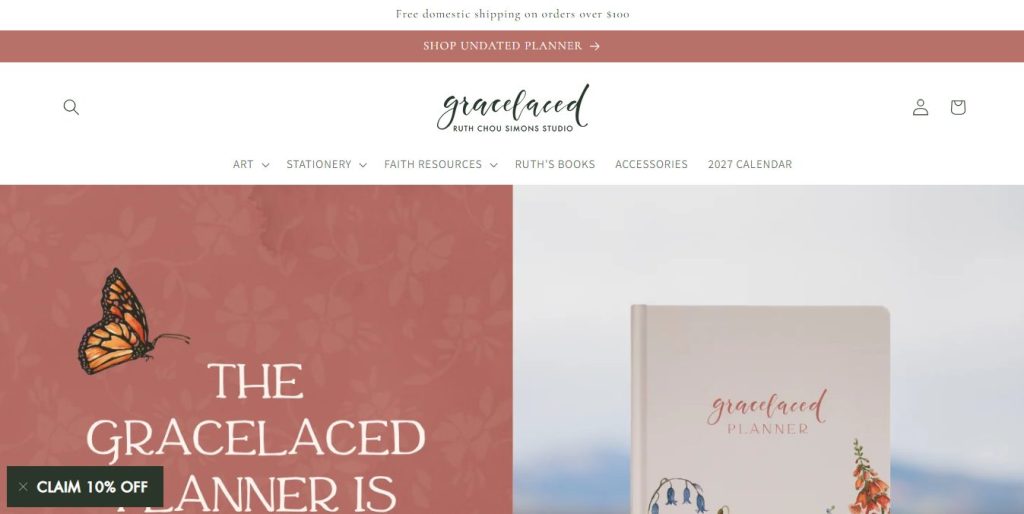
GraceLaced is a creative brand associated with art prints, stationery, and products featuring faith-inspired messages. It illustrates how a store can develop a distinctive identity around a specific subject and extend that identity across different product categories.
For artists and creative entrepreneurs, a clear theme can help make a catalog feel cohesive even when it includes several types of products.
What makes it inspiring: Build your product range around a recognizable artistic style or theme. Consistent imagery, messaging, and design can help customers identify your brand across different product categories.
10. Totally Toronto Art
Website: Totally Toronto Art
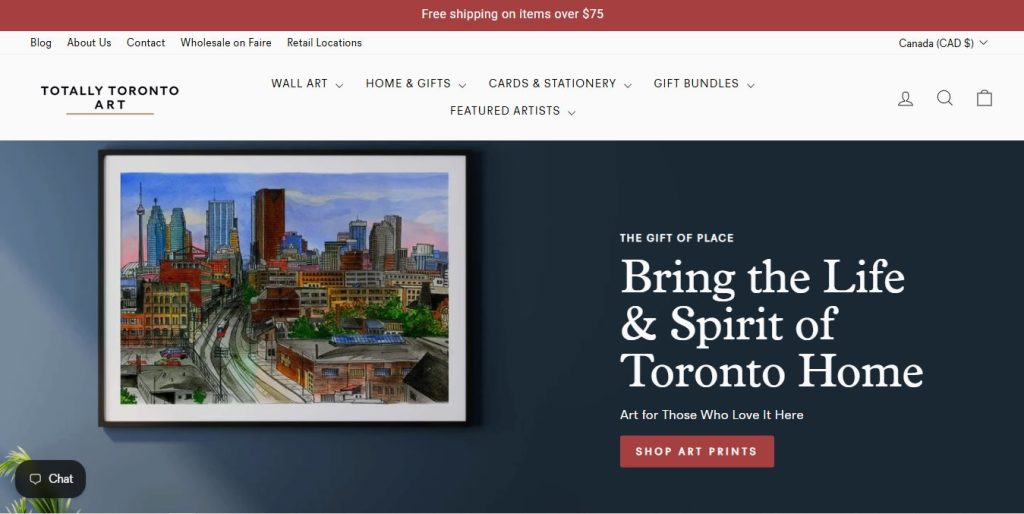
Totally Toronto Art offers a useful concept to explore for businesses built around local identity and place-inspired artwork. Art featuring familiar landmarks, neighborhoods, and city scenes can appeal to residents, visitors, and people with personal connections to a location.
This approach demonstrates how artists can turn local knowledge and distinctive surroundings into a recognizable creative niche.
What makes it inspiring: Consider using a location, community, or regional identity as the foundation of your collections. Place-based artwork can serve both as home decor and as a meaningful souvenir or gift.
Photography & Digital Art Shopify Stores
Photography stores face a unique challenge: the website must let images speak for themselves while providing enough information for customers to evaluate and purchase the work. These examples offer ideas for combining portfolio presentation, storytelling, and ecommerce.
11. Almost Real
Website: Almost Real

Almost Real is a photography-focused brand worth exploring for its gallery-oriented approach to presenting visual work. Photography stores can benefit from layouts that keep attention on the images and avoid unnecessary visual distractions.
When the artwork is the main attraction, the website should support the viewing experience rather than compete with it. Thoughtful spacing, consistent image presentation, and clear navigation can make it easier for visitors to explore a collection.
What makes it inspiring: Let your photography take center stage. Use a consistent visual layout, high-quality images, and simple navigation to help visitors focus on the work.
12. Rob Hornstra
Website: Rob Hornstra
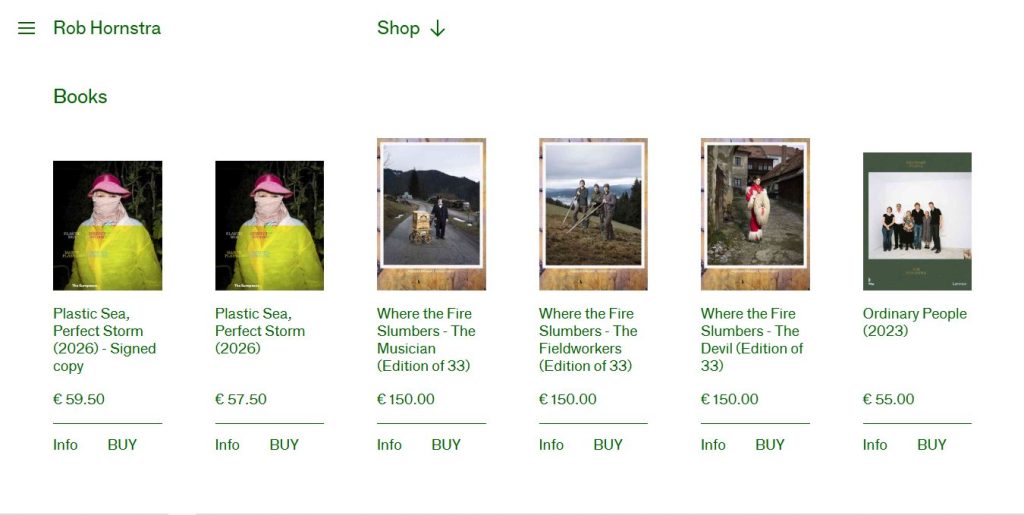
Rob Hornstra is a documentary photographer whose work demonstrates the relationship between photography, long-term projects, and visual storytelling.
For photographers, a website can serve as more than a catalog of images. Organizing photographs into projects gives visitors context and helps them understand the themes, locations, and ideas that connect individual works.
What makes it inspiring: Present related photographs as cohesive projects. Introduce the subject and background of each series so visitors can understand the story behind the images.
13. Nick Mele Fine Art
Website: Nick Mele
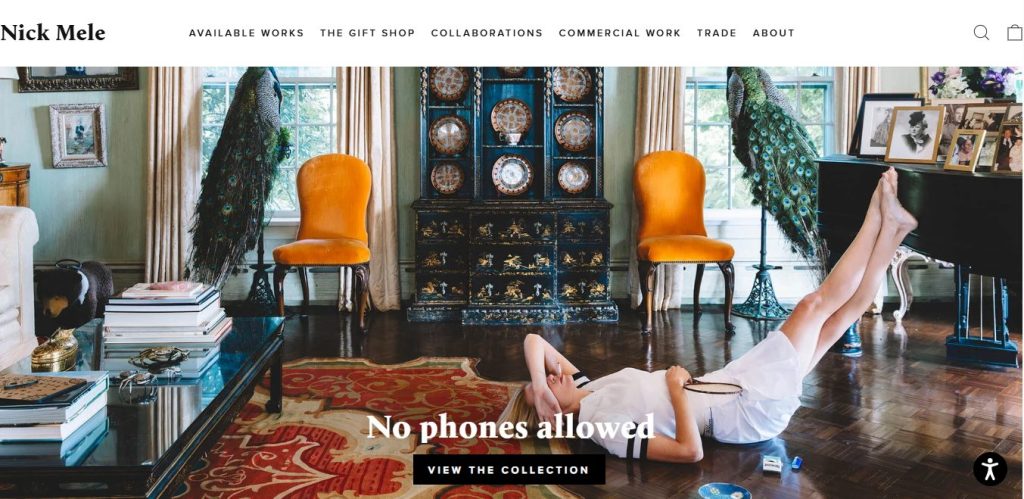
Nick Mele’s photography-focused online presence offers a reference point for photographers looking to connect their creative portfolio with a commercial offering.
A photographer’s website needs to balance two goals: showcasing artistic work and helping potential buyers understand how to purchase or commission it. A clear separation between portfolio content, available artwork, and professional information can support both.
What makes it inspiring: Make the next step clear for different visitors. Someone interested in purchasing a print may need a different path from someone looking to explore your portfolio or inquire about a project.
Independent Artists & Creative Brand Stores
Independent artists often need their websites to perform several roles at once: introduce their work, communicate their personality, showcase a portfolio, and generate sales. The following examples illustrate different ways to approach this combination.
14. Mel Volkman
Website: Mel Volkman
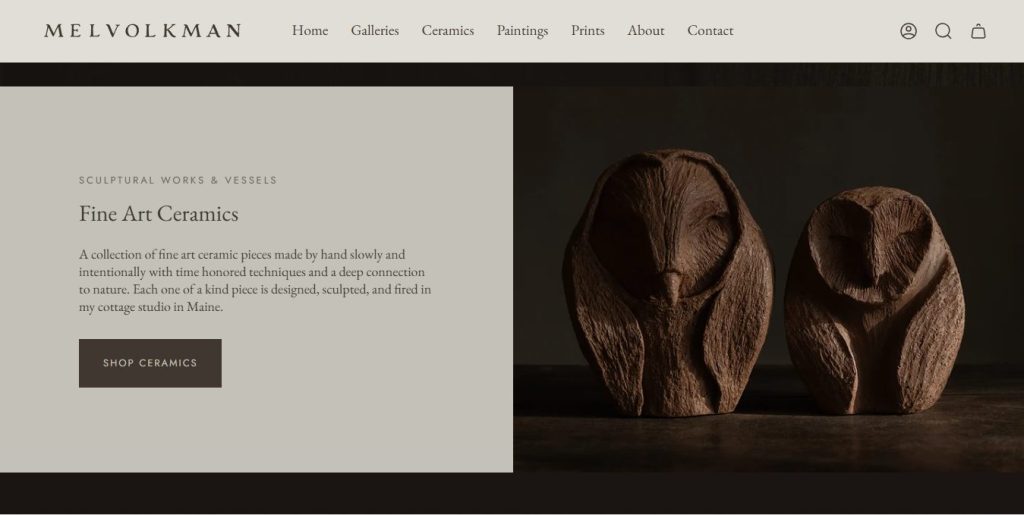
Mel Volkman’s website is a candidate for exploring how an independent creative can combine a personal portfolio with an online storefront.
For individual artists, a recognizable visual style is an important part of brand identity. The website should help visitors discover the work while making it easy to move from browsing a portfolio to exploring available products.
What makes it inspiring: Keep your portfolio and store connected. A consistent visual identity across both areas helps visitors recognize your work and understand the relationship between your creative practice and the products you sell.
15. Kate Blairstone
Website: Kate Blairstone

Showing artwork in context can help potential customers understand how a design might look beyond a flat image on a screen.
Kate Blairstone is worth investigating as an example of an illustration-led creative brand. For illustrators, a personal website can showcase not only finished artwork but also the ways their visual style can be applied to products, interiors, and commissioned projects.
What makes it inspiring: Demonstrate how your artwork works in real-world settings. Lifestyle imagery and examples of applied designs can help customers visualize the value of your creative work.
16. Wyatt Waters Gallery
Website: Wyatt Waters
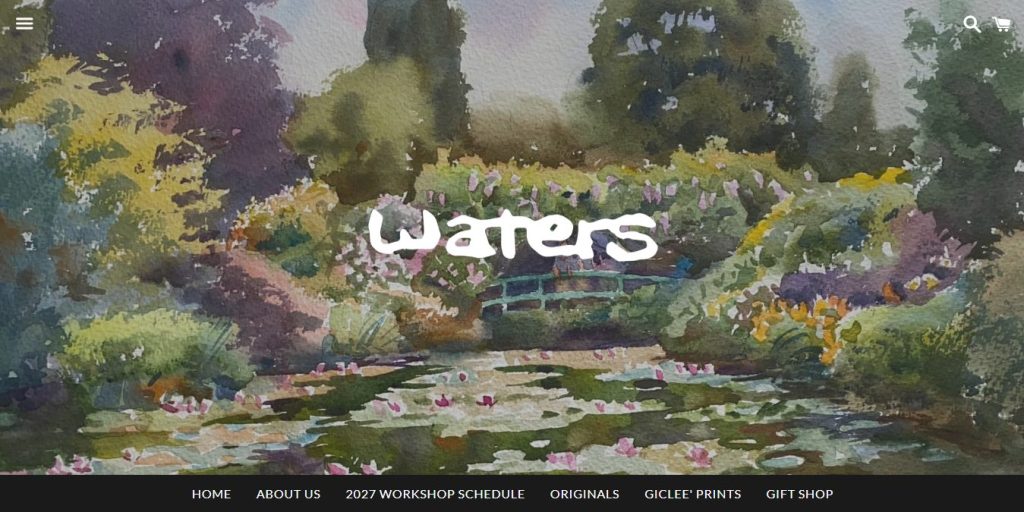
Wyatt Waters is an artist known for watercolor painting. His gallery provides a useful model to investigate for artists interested in combining original works with prints, books, and other art-related products.
Offering multiple formats can help artists serve customers with different budgets and purchasing goals while maintaining a consistent artistic identity.
What makes it inspiring: Consider how your original artwork could translate into prints, publications, or other products. A well-planned product range can make your work accessible to different audiences without losing the connection to your original creations.
17. Botanica Paper Co.
Website: Botanica Paper Co.
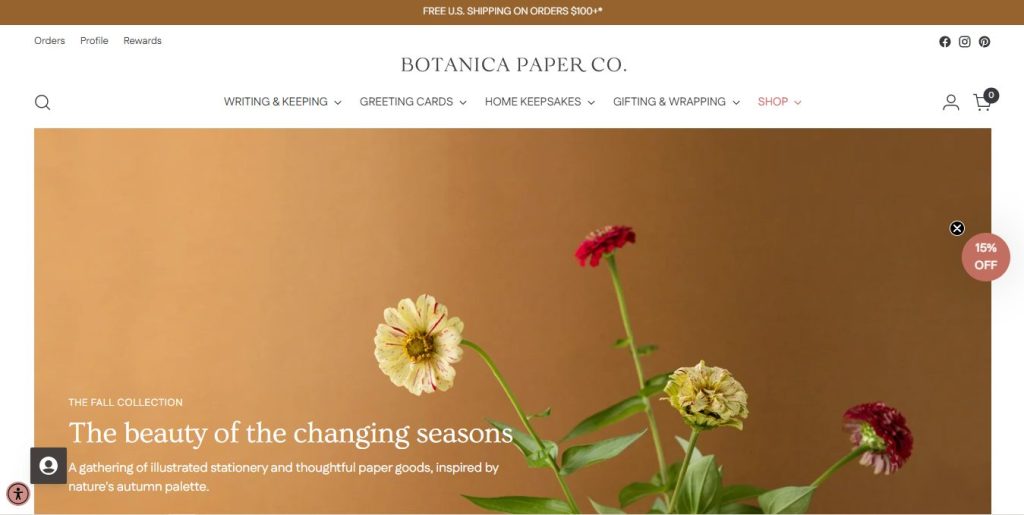
Botanica Paper Co. is a candidate for exploring how illustration and stationery can work together as a creative product brand.
For businesses built around hand-drawn patterns or distinctive illustrations, stationery and gift products provide ways to apply the same visual identity across multiple formats. Consistency is essential to ensure that the broader product range still feels connected.
What makes it inspiring: Develop complementary products around your strongest designs. Applying a consistent illustration style across stationery and gifts can help create a recognizable collection.
19. Good Black Art
Website: Good Black Art
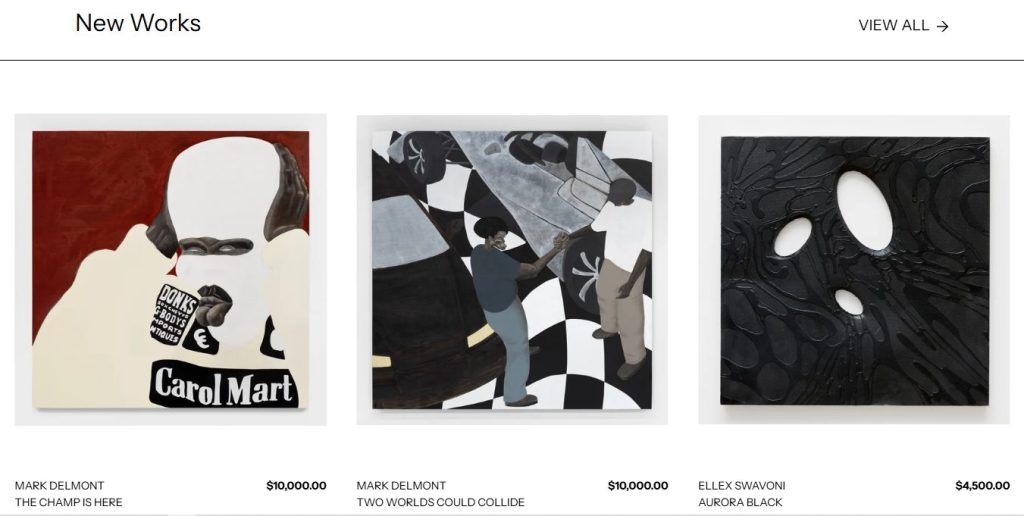
Good Black Art focuses on showcasing artwork by Black artists. Its concept illustrates how a store can build its identity around a particular artistic community and help visitors discover work from multiple creators.
For art platforms and collective brands, artist discovery is an important part of the experience. Visitors should be able to explore individual artists while also browsing the broader collection.
What makes it inspiring: Make the artists behind the work easy to discover. Dedicated artist profiles and thoughtfully organized collections can help visitors connect with individual creators and explore more of their work.
Music, Entertainment & Artist Merchandise Stores
Artists and entertainers often need their online stores to do more than sell products. Their websites may also serve as destinations for new releases, event announcements, videos, and fan merchandise.
These examples are especially relevant to musicians and creative brands looking to connect their artistic identity with an e-commerce experience.
20. Frocksteady
Website: Frocksteady
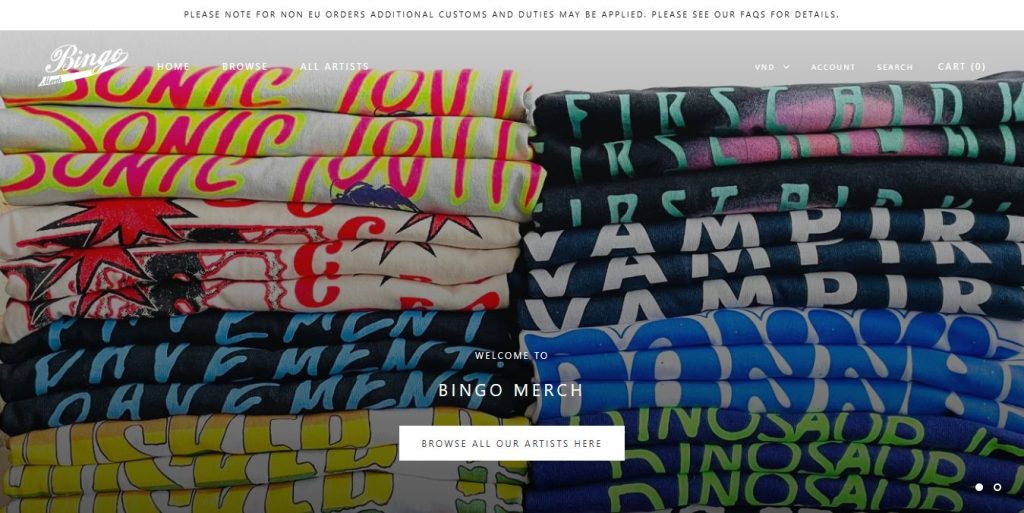
Frocksteady is associated with official merchandise for musicians and bands, including products such as clothing, records, CDs, and posters.
This type of store illustrates the potential of combining different merchandise formats within a music-focused catalog. Fans may visit to find a particular artist’s products, discover a release, or purchase memorabilia connected to their favorite music.
What makes it inspiring: Organize merchandise so fans can easily find products associated with their favorite artists. Clear artist categories and product groupings can make a multi-artist catalog easier to navigate.
21. Brooklyn Museum Shop
Website: Brooklyn Museum Shop
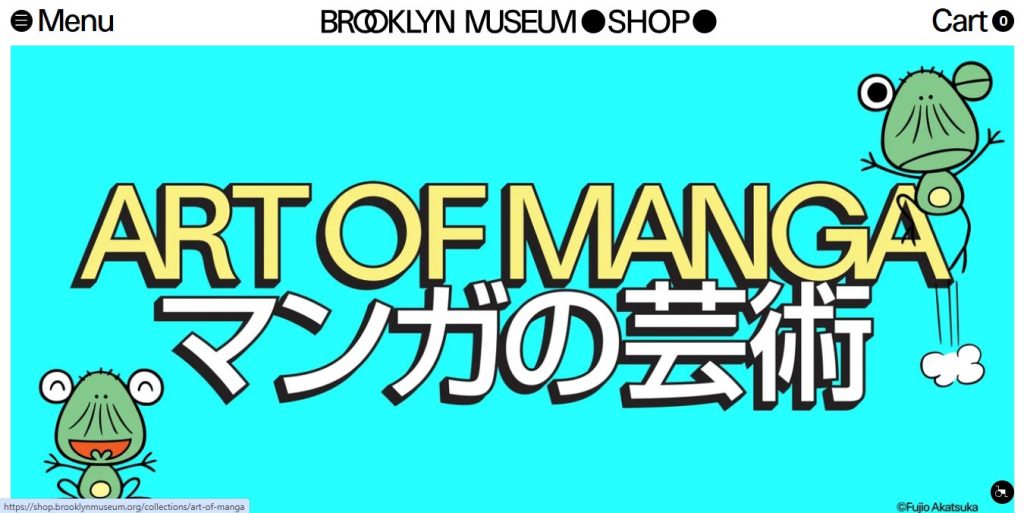
The Brooklyn Museum Shop offers art-inspired products, books, accessories, and gifts connected to the museum’s collections and cultural identity.
Although a museum shop differs from an independent artist’s storefront, it offers a useful example of translating artistic inspiration into a broader product assortment. Visitors can explore products that connect with art, design, and cultural interests.
What makes it inspiring: Build a coherent product collection around your creative identity. Art-inspired gifts, books, and complementary products can extend the customer experience beyond original artwork.
22. Sanrio
Website: Sanrio
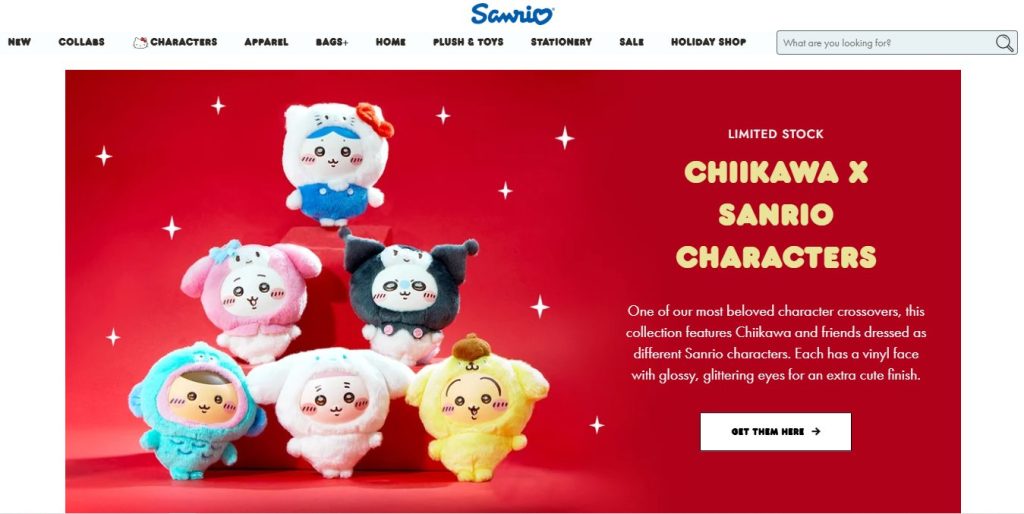
Sanrio is known for its character-based creative universe and merchandise. Its business demonstrates how recognizable characters and illustrations can be developed into a broad range of products.
For illustrators and character artists, the underlying lesson is the value of a consistent visual identity. Customers may connect with a character first and then explore different products featuring that character.
What makes it inspiring: If your creative business centers on original characters, maintain a consistent identity across your product catalog. A recognizable character can connect different product categories and encourage customers to explore the wider collection.
Explore other Shopify website examples:
- 15+ Successful Shopify Bakery Website Examples to Learn From
- 10 Best Shopify Home Decor Stores to Inspire Your Business
- Shopify Pet Store Examples: How Top Brands Design, Market, and Sell Online
- 30+ Successful Shopify Clothing Stores To Learn From
- 20+ Shopify Dropshipping Store Examples That Will Inspire You
- Top 10+ Successful and Inspiring One Product Shopify Stores
- 10+ Best Beverage Product Showcase Landing Page Examples for Shopify Brand
What Makes a Great Shopify Art Store?
A successful Shopify art store does more than display artwork online. It combines compelling visuals, useful product information, and intuitive navigation to help customers discover art and purchase with confidence. Here are six essential elements to consider when building your store.
High-Quality Artwork Photography and Visual Presentation
Since customers cannot examine artwork in person, product photography needs to communicate its details accurately.
- Use high-resolution images to showcase textures, colors, and fine details.
- Include close-ups and multiple views of each piece.
- Add lifestyle images to help customers visualize artwork in their spaces.
- Maintain consistent image styles without altering the artwork’s actual appearance.
Gallery-Style Layouts and Intuitive Navigation
A clean, gallery-style layout keeps attention on the artwork. Use whitespace, simple typography, and organized product grids to create a visually appealing browsing experience.
Group products by artist, style, medium, or subject. For larger catalogs, add search and filters for attributes such as price, size, and orientation so visitors can find relevant pieces quickly.
Compelling Artist Stories and Brand Identity
Customers may connect with the story behind an artwork as much as its appearance. Create dedicated artist profiles featuring biographies, portfolios, and creative backgrounds. Share the inspiration behind collections and use consistent colors, typography, and visual elements to establish a recognizable brand identity.
Detailed Artwork Product Pages
Product pages should answer common questions before customers make a purchase. Include:
- Artwork dimensions, materials, and production techniques.
- Clear distinctions between original artwork and reproductions.
- Available sizes, framing options, and edition details.
- Transparent shipping, packaging, and return policies.
For larger or higher-priced pieces, additional information about authenticity and provenance can help customers make informed decisions.
Trust-Building and Shopping Features
Trust is essential when customers buy art online. Display genuine customer reviews, provide accurate authenticity information where applicable, and make delivery costs and estimated shipping times easy to find.
A secure checkout and mobile-friendly design are equally important. Ensure that product images, navigation, and purchasing options work smoothly across different screen sizes.
Engaging Multimedia and Fan Experiences
Multimedia can help artists build stronger connections with their audiences. Consider adding behind-the-scenes videos, studio tours, artist interviews, or exhibition announcements.
Depending on your business model, you can also offer artist merchandise, embed music or video previews, and use newsletter signups to share new collections and upcoming events. Choose features that match your audience. For example, musicians may benefit from music previews and tour dates, while visual artists may prioritize studio content and new artwork announcements.
How to Create Your Own Shopify Art Store
After exploring successful Shopify art stores, you can apply their ideas to build a storefront that reflects your artistic style and business goals. Follow these six steps to get started.
Step 1. Choose Your Art Niche and Products
Decide what you want to sell, whether it’s original paintings, art prints, illustrations, photography, digital downloads, or creative merchandise. Defining your niche helps you identify your target audience and shape your store’s design and product offerings.
Step 2. Select a Shopify Theme That Matches Your Artistic Style
Choose a Shopify theme that showcases your work effectively and supports your business model. Look for high-quality image layouts, flexible product pages, intuitive navigation, and customization options that fit your brand.
For musicians, bands, and performing artists, Beauvoir by Boostify offers a way to combine an artist’s online presence with an e-commerce storefront. Its cinematic video sections, embedded music player, tour date listings, and merchandise-focused design make it particularly suitable for artists who want to showcase their work, promote upcoming performances, and sell albums, vinyl, or branded merchandise in one place.
Step 3. Organize Your Artwork into Collections
Group products by artist, medium, theme, or collection. Use descriptive product titles and include relevant details such as dimensions, materials, and edition information to help customers understand each piece.
Step 4. Customize Your Store Design
Create a homepage that introduces your artistic identity and highlights featured collections. Add About the Artist and Contact pages, and consider a gallery or portfolio section. Ensure your store works smoothly on mobile devices.
Step 5. Set Up Payments, Shipping, and Store Policies
Configure payment methods, determine appropriate packaging and shipping options, and clearly explain delivery times, costs, and return policies.
Step 6. Launch and Promote Your Art Store
Apply basic e-commerce SEO, share your artwork on relevant social media platforms, and build an email list for new releases and collection announcements. Monitor store performance and refine the shopping experience over time.
Frequently Asked Questions About Shopify Art Stores
Is Shopify a good platform for selling art?
Yes. Shopify provides customizable storefronts, product management, payment processing, and ecommerce tools for artists selling original works, prints, photography, and merchandise.
Can independent artists sell their artwork on Shopify?
Yes. Independent artists can create branded online stores, manage their own products, and sell directly to customers without operating a physical gallery.
What types of art can you sell on Shopify?
You can sell original paintings, art prints, illustrations, photography, digital downloads, sculptures, and creative merchandise, subject to applicable laws and Shopify’s policies.
What features should a Shopify art store have?
Prioritize high-quality artwork images, clear product descriptions, intuitive navigation, mobile-friendly layouts, and a reliable checkout. Artist profiles and collection filters can further improve the shopping experience.
Can you sell both original artwork and art prints on Shopify?
Yes. You can list originals and prints as separate products or variants, with distinct prices, inventory levels, and edition details where applicable.
What Shopify theme is best for an art store?
The best theme depends on your products and audience. Art galleries may prioritize large images and minimalist layouts, while musicians and entertainers may benefit from multimedia sections, event listings, and merchandise features.