
The home fitness market continues to create new opportunities for ecommerce brands, as more consumers invest in equipment that brings the workout experience into their own homes. The global home fitness equipment market was valued at $12.88 billion in 2025 and is projected to reach $13.57 billion in 2026, showing continued demand for everything from cardio machines and strength equipment to smaller workout gear.
For merchants, selling these products online comes with its own challenges. Treadmills, squat racks, weight benches, dumbbells, yoga mats, and other fitness products often require detailed specifications, multiple variants, high-quality visuals, and clear product navigation to help shoppers make confident purchasing decisions.
No matter which home gym and fitness business ideas come to mind, that makes choosing the right storefront more important than simply picking a design that looks good. In this guide, we’ll explore the best home gym Shopify themes for 2026, comparing their strengths, pricing, and ideal use cases for fitness equipment stores, sports retailers, and growing fitness brands.
Table of Contents
What Makes a Shopify Theme Good for Home Gym Stores?
A treadmill, squat rack, adjustable dumbbell, or complete cable machine can require shoppers to understand its dimensions, capacity, setup, features, and how it fits into their workout space before they buy. A good theme should make that information easy to explore while giving the products enough visual impact to stand out.
Here are the key criteria we’d look for when evaluating a Shopify theme for a home gym or fitness equipment store.
Heavy-Product Spec Display
Home gym equipment can be difficult to evaluate from a standard product photo alone. Shoppers may want to know how large a treadmill is, how much weight a bench can support, or whether a squat rack will fit in their available space.
Your Shopify fitness theme should give merchants enough flexibility to present details such as:
- Dimensions and product weight
- Maximum weight capacity
- Materials and construction
- Warranty information
- Included components
- Assembly requirements
- Recommended floor or room space
For larger equipment, clear product information can be just as important as product photography itself.
Product Video & Visual Merchandising
A customer looking at a rowing machine or cable machine wants to understand more than what it looks like. They also need to see how it moves and how it can be used.
This makes strong visual merchandising particularly valuable for home gym stores. Look for themes that give merchants room for:
- Product demonstration videos
- Lifestyle photography
- Equipment-in-use imagery
- Full-width media
- Workout or exercise demonstrations
- Home gym setup inspiration
Showing a product inside a realistic workout environment can also help shoppers understand its scale and imagine using it in their own space.
You can refer to these gym website design examples for inspiration.
Variant & Bundle Optimization
Fitness products often come with more variations and purchasing combinations than a typical retail product. Dumbbells can be sold in different weights, while racks, benches, and weight sets may be available in multiple configurations or bundled together.
A suitable theme should make these choices easy to understand and navigate. It should also support related-product merchandising, so merchants can suggest complementary products, for example, pairing a squat rack with a bench, barbell, and weight plates.
Help Shoppers Navigate Equipment-Heavy Catalogs
A home gym store can quickly grow beyond a few pieces of equipment. Merchants may sell cardio machines, strength equipment, free weights, training accessories, recovery products, and even activewear under the same storefront.
A suitable theme should support clear category structures such as:
Cardio → Treadmills → Folding Treadmills
Strength → Racks & Cages → Power Racks
Free Weights → Dumbbells → Adjustable Dumbbells
Accessories → Mats → Yoga Mats
Strong filtering and search can become especially valuable when customers need to narrow products by attributes such as weight, equipment type, size, or intended use.
Create Space for Home Gym Inspiration
Unlike many everyday products, gym equipment is closely connected to a lifestyle. Customers aren’t only buying a treadmill or a set of weights—they may be building an entire workout space.
This creates an opportunity for merchants to use their storefront as a source of inspiration.
A strong home gym theme should make it possible to showcase:
- Complete home gym setups
- Room-based collections
- Workout styles
- Before-and-after spaces
- Equipment combinations
- Fitness lifestyle content
For example, instead of simply promoting individual products, a merchant could create a “Small Home Gym” collection featuring a foldable bench, adjustable dumbbells, resistance bands, and a yoga mat.
Support Cross-Selling Beyond Equipment
Home gym merchants often have an opportunity to sell much more than large equipment. A customer buying a treadmill may also need a protective mat, dumbbells, resistance bands, or recovery accessories.
Likewise, a customer purchasing a complete strength setup may be interested in gym clothing or other training products.
The theme should therefore support natural product recommendations and merchandising across categories such as strength equipment, cardio equipment, free weights, fitness accessories, yoga mats, recovery products, gym bags, and activewear.
This helps turn a single equipment purchase into a broader shopping experience and can increase the value of each order.
Make Mobile Product Research Easy
Fitness equipment is often a considered purchase rather than an impulse buy. Shoppers may compare several models, check specifications, watch product videos, and revisit a product before placing an order.
Much of that research can happen on mobile.
For home gym stores, a mobile-friendly theme should make it easy to:
- Compare product options
- Read specifications
- Select weight or configuration variants
- Watch product videos
- Browse related equipment
- Add products to the cart without losing context
The goal isn’t simply to make the store “responsive,” but to make researching and comparing fitness products comfortable on a smaller screen.
10+ Best Home Gym Shopify Themes for 2026
Not sure which theme is the right fit for your fitness store? Here’s a quick overview of the 10 best home gym Shopify themes in this guide. Use it as a starting point to see which options match your store size, product range, and brand direction, then dive into the individual reviews below for a closer look.
| Shopify Theme | Best For | Key Strength | Best Product Fit | Price |
| Impulse | Large fitness catalogs | Product discovery & merchandising | Cardio, strength equipment, free weights | $500 |
| Motion | Visual-first fitness brands | Video & product demonstrations | Treadmills, rowing machines, premium equipment | $420 |
| Neat | Premium minimalist brands | Clean design & visual presentation | Home gym equipment, free weights, accessories | $100 |
| Dawn | New fitness stores | Free, flexible foundation | Fitness products, accessories, smaller catalogs | Free |
| Prestige | Luxury fitness brands | Premium brand storytelling | High-end equipment & lifestyle products | $400 |
| Focal | Fitness & sports lifestyle stores | Cross-selling & merchandising | Accessories, apparel, workout gear | $320 |
| Warehouse | Very large inventories | Large-catalog navigation | Equipment, parts, accessories, thousands of SKUs | $320 |
| Symmetry | Established fitness retailers | Catalog + polished retail experience | Multi-category & multi-brand equipment | $420 |
| Showcase | Content-driven fitness brands | Visual storytelling & immersive content | Activewear, training, sports & lifestyle products | $400 |
| Wave | Modern fitness & sports brands | Mobile performance & product bundles | Workout equipment, activewear & accessories | $320 |
Impulse – Best for Large Fitness Equipment Catalogs
Best For: Home gym and fitness stores with large, growing product catalogs.
Why It Works for Home Gym Stores
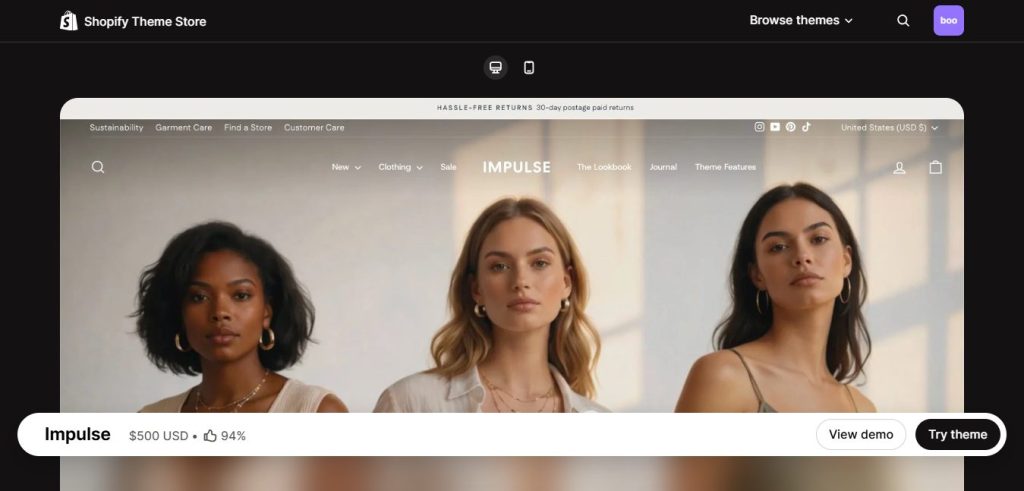
Impulse is particularly suited to stores selling across multiple categories, from cardio and strength equipment to free weights and gym accessories. Its enhanced search, filtering, sorting, and mega menu features make it easier for shoppers to navigate a broad catalog and find specific equipment without getting overwhelmed.
For fitness merchants, product tabs, videos, high-resolution imagery, and image galleries provide flexible ways to present technical details alongside product visuals. Promo banners, badges, and merchandising tools can support equipment campaigns, while cross-selling helps connect larger purchases with complementary products such as benches, barbells, weight plates, and mats.
Key Features: Enhanced search & filtering, mega menu, product videos, product tabs, cross-selling, promotional tools.
Pricing: $500 one-time payment.
Pros: Excellent catalog navigation and strong merchandising tools.
Cons: May offer more functionality than smaller stores need.
Our Verdict: A strong choice for established fitness merchants where catalog organization and product discovery are top priorities.
Motion – Best for Video-First Fitness Brands
Best For: Fitness brands that rely on product demonstrations, video, and immersive visual storytelling.
Why It Works for Home Gym Stores
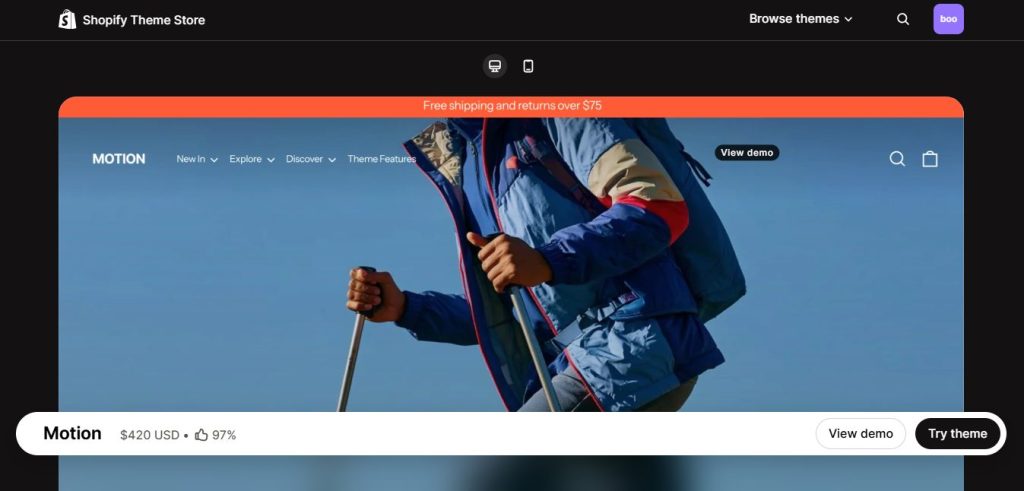
Motion is a natural fit for equipment where movement and usage are part of the selling point. Product videos, animation, image galleries, hotspots, and before-and-after sliders give merchants more ways to demonstrate how a treadmill, rowing machine, exercise bike, or cable system works—not just what it looks like. Lookbooks and large-format imagery can also showcase complete home gym setups and lifestyle-focused collections.
The theme doesn’t sacrifice product discovery for visual presentation. Enhanced search, filtering and sorting, mega menus, product options, and recommended products help shoppers move from inspiration to specific equipment. Quick buy can also work well for smaller workout products and accessories that require less consideration.
Key Features: Product videos, animation, lookbooks, image hotspots, before/after slider, enhanced search, product filtering, quick buy.
Pricing: $420 one-time payment.
Pros: Excellent for demonstrations and visual storytelling; strong product discovery tools.
Cons: Its visual features are best utilized with high-quality photography and video.
Our Verdict: Motion is a strong choice for fitness brands that sell through movement, demonstration, and visual storytelling, particularly premium cardio and strength equipment.
Neat – Best for Minimalist Fitness Stores
Best For: Fitness brands selling home gym equipment, free weights, activewear, and fitness accessories with a clean, premium aesthetic.
Why It Works for Home Gym Stores
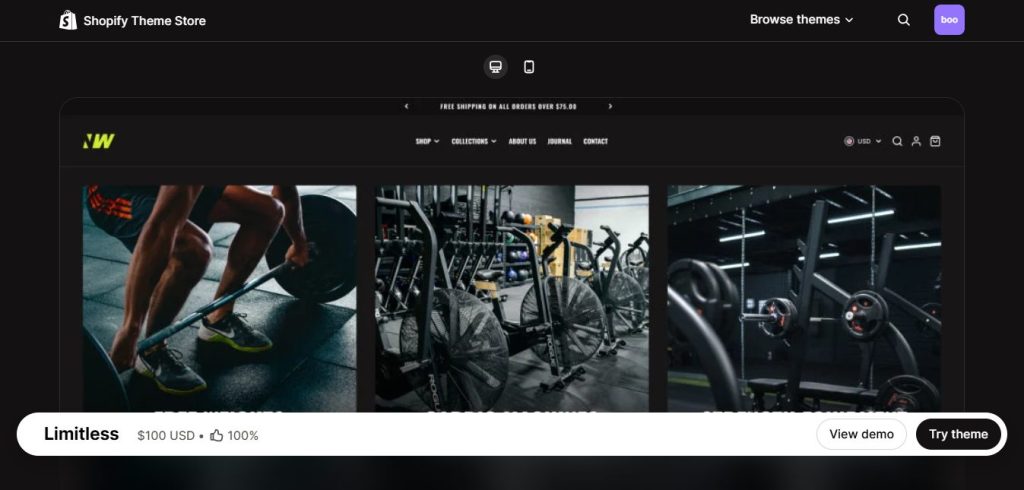
Neat’s Limitless preset is particularly well suited to fitness because its minimal, image-focused design lets the products take center stage. Large media, product videos, image galleries, zoom, hotspots, and lookbooks give merchants plenty of room to showcase equipment in detail—from adjustable dumbbells and benches to complete home gym setups. Instead of overwhelming shoppers with information, the clean layout keeps attention on the products and the way they fit into a real workout environment.
It also combines that visual approach with practical ecommerce features, including product filtering and sorting, mega menus, quick buy, recommended products, and cross-selling. That makes it easier to organize different fitness categories while encouraging customers to add complementary products such as yoga mats, resistance bands, or workout accessories. And at $100, Neat offers a notably more accessible entry point than many premium Shopify themes.
Key Features: Minimal design, large product media, product videos, lookbooks, image hotspots, filtering & sorting, mega menu, quick buy, cross-selling.
Pricing: $100 one-time payment.
Pros: Minimal and premium aesthetic; strong visual presentation; flexible merchandising; affordable one-time price.
Cons: The visual-first design benefits most from high-quality product photography and video.
Our Verdict: If you want a clean, premium-looking fitness storefront without a premium theme price, Neat with the Limitless preset is one of the strongest options to consider. Limitless is a preset of the Neat Shopify minimal theme, which also includes other presets for different brand styles and industries.
Our Verdict: Showcase is a strong choice for fitness and sports brands that sell a lifestyle and community alongside their products, particularly activewear, training, running, and visually driven fitness brands.
Warehouse – Best for Large Fitness Equipment Inventories
Best For: Fitness retailers with hundreds or thousands of products across multiple equipment categories.
Why It Works for Home Gym Stores
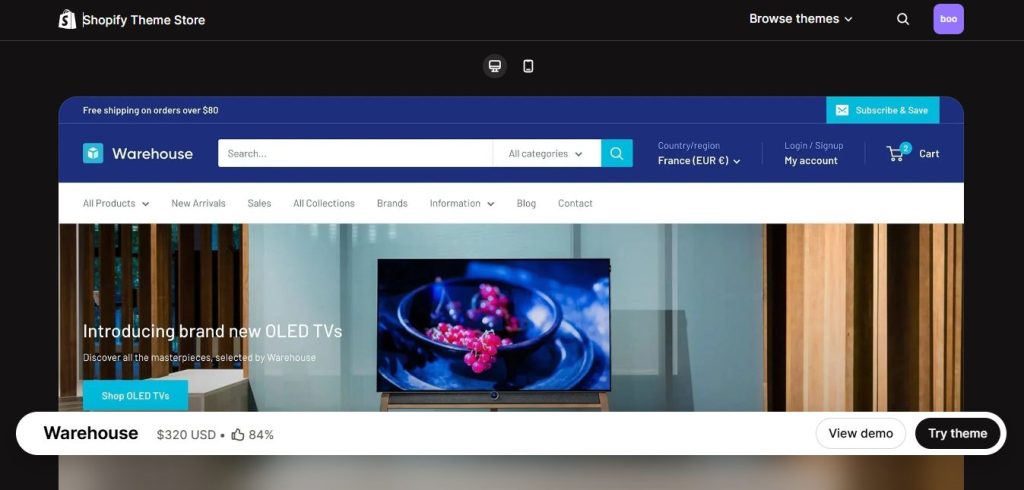
Warehouse is built specifically around large catalogs, with collection pages designed to organize, display, and filter thousands of products. This makes it especially useful for fitness retailers that go beyond a few popular machines and carry extensive ranges of cardio equipment, strength machines, free weights, benches, racks, plates, and accessories. Enhanced search, mega menus, filtering, sorting, and swatch filters help shoppers narrow down a crowded catalog without having to browse product by product.
Its catalog-first approach is complemented by practical tools for equipment retail. Product tabs and usage information can keep technical details organized, while product videos, quick view, stock counters, recently viewed products, cross-selling, and recommendations support a more efficient buying journey. Shopify Plus merchants can also use quantity pricing, which can be useful for commercial gyms or customers purchasing multiple items.
Key Features: Large-catalog collection pages, advanced search & filtering, mega menu, swatch filters, quick view, stock counter, product tabs, cross-selling.
Pricing: $320 one-time payment.
Pros: Excellent for large inventories; strong product discovery; useful tools for technical and multi-product catalogs.
Cons: More catalog-focused than lifestyle or premium visual themes.
Our Verdict: Warehouse is one of the strongest options for established fitness retailers with extensive inventories, particularly when helping shoppers find the right product matters more than creating a highly editorial storefront.
Dawn – Best Free Shopify Theme for New Home Gym Stores
Best For: New home gym and fitness stores that want a clean storefront without paying for a premium theme upfront.
Why It Works for Home Gym Stores
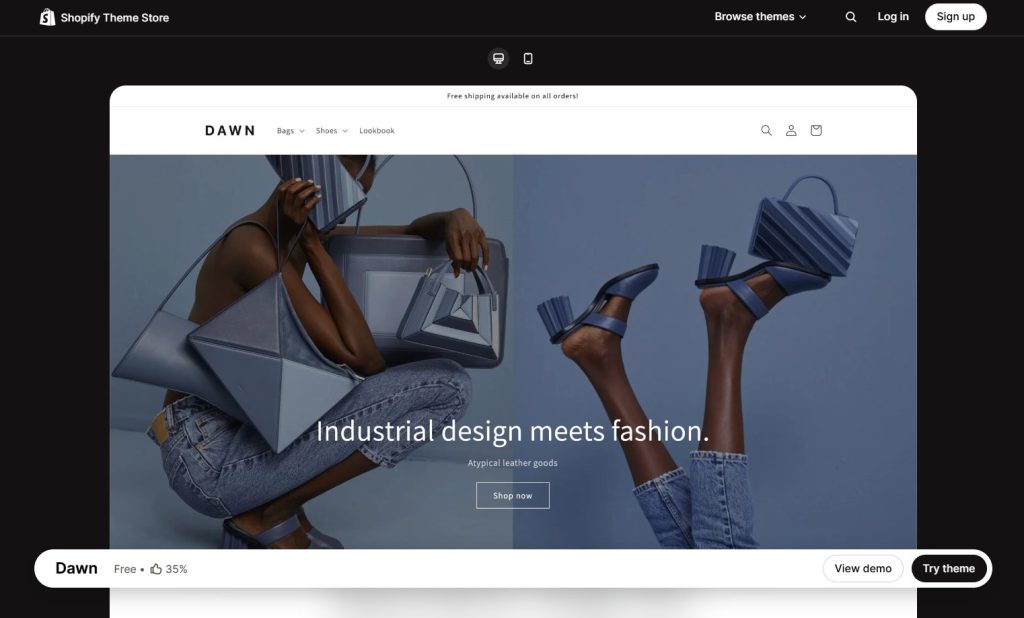
Dawn’s biggest advantage is its minimal, product-first approach. Large imagery, image galleries, zoom, product videos, and product options give smaller fitness brands a solid foundation for showcasing equipment such as dumbbells, benches, resistance bands, yoga mats, and other workout products without making the storefront feel crowded.
It also includes practical e-commerce features such as product filtering and sorting, mega menus, quick buy, cross-selling, and recommended products. That means a new merchant can start with a relatively simple catalog and still have room to expand into different fitness categories as the business grows.
Key Features: Minimal design, large product media, product videos, filtering & sorting, mega menu, quick buy, cross-selling.
Pricing: Free.
Pros: No upfront theme cost; clean design; flexible foundation for customization.
Cons: Stores with large or highly specialized equipment catalogs may eventually need more advanced merchandising capabilities.
Our Verdict: Dawn is an excellent starting point if you’re launching a home gym store on a limited budget and want to invest more in products, branding, and marketing before upgrading to a specialized premium theme.
Let’s explore more minimal Shopify themes.
Prestige – Best for Luxury Fitness Brands
Best For: Premium fitness brands selling high-end home gym equipment and lifestyle products.
Why It Works for Home Gym Stores
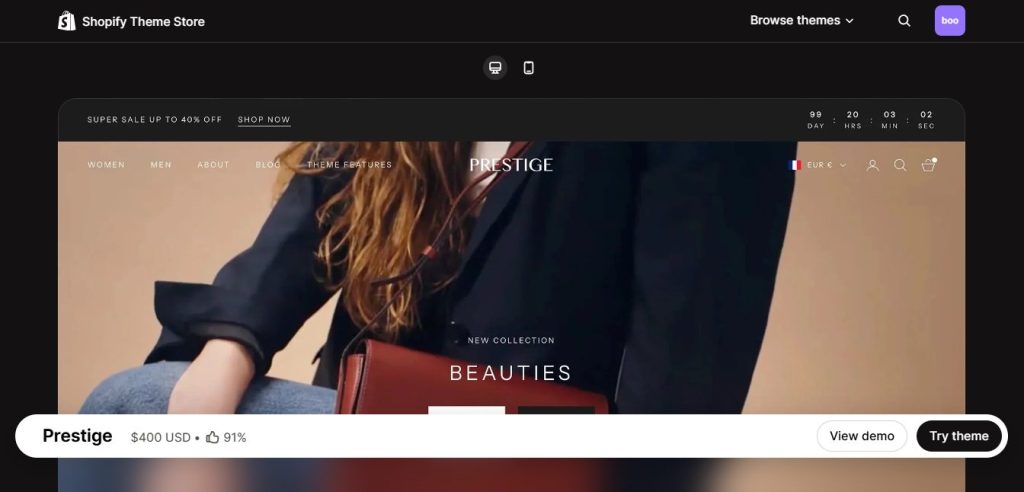
Prestige is designed around premium brand presentation, making it a strong fit for merchants who want to sell the lifestyle and experience behind their fitness products, not just the equipment itself. Lookbooks, high-resolution imagery, product videos, image hotspots, and flexible content sections can be used to showcase sophisticated home gym spaces, premium equipment, and curated workout collections more editorially.
The theme also provides practical tools for turning that premium presentation into a shopping experience. Product tabs can organize technical information, while enhanced search, filtering, mega menus, recommended products, and cross-selling help customers move from inspiration to purchase. For example, a merchant could present a complete luxury home gym and then guide shoppers toward the treadmill, bench, weights, and accessories used in the setup.
Key Features: Lookbooks, product videos, high-resolution imagery, image hotspots, product tabs, enhanced search, filtering, cross-selling.
Pricing: $400 one-time payment.
Pros: Strong luxury positioning; excellent visual storytelling; extensive merchandising tools.
Cons: The premium aesthetic may be excessive for budget-focused or purely catalog-driven stores.
Our Verdict: Prestige is a compelling choice for high-end fitness brands that want their Shopify store to feel more like a premium lifestyle brand than a traditional equipment retailer.
Focal – Best for Fitness & Sports Lifestyle Stores
Best For: Fitness and sports brands with a medium-sized catalog spanning equipment, apparel, and accessories.
Why It Works for Home Gym Stores
Focal works particularly well when a fitness store needs to sell a collection of products rather than one hero piece of equipment. Its 20+ built-in sections, lookbooks, high-resolution galleries, product videos, image hotspots, and color swatches give merchants plenty of flexibility to build lifestyle-focused collections around strength training, yoga, running, or home workouts.
Its strongest advantage for fitness merchants may be cross-selling. Product recommendations on product and cart pages, sticky add-to-cart, quick buy, and recently viewed products can encourage shoppers to build a more complete basket—for example, pairing dumbbells with a yoga mat, resistance bands, or workout apparel. Filtering, enhanced search, mega menus, and swatch filters also keep growing collections easy to browse.
Key Features: 20+ built-in sections, lookbooks, product videos, image hotspots, cross-selling, sticky cart, enhanced search, filtering & sorting.
Pricing: $320 one-time payment.
Pros: Strong merchandising; excellent cross-selling; flexible for lifestyle-led fitness stores.
Cons: Less suited to very large, equipment-heavy catalogs than catalog-first themes such as Warehouse.
Our Verdict: Focal is a strong option for fitness and sports brands that want to turn complementary products into a cohesive lifestyle shopping experience, rather than simply list equipment.
Symmetry – Best for Multi-Brand Fitness Retailers
Best For: Fitness retailers and distributors carrying multiple brands, product categories, or a broad range of equipment.
Why It Works for Home Gym Stores
Symmetry is a strong fit when a fitness store needs to balance a broad catalog with a polished retail experience. Enhanced search, mega menus, collection navigation, and product filtering help shoppers move through categories such as cardio, strength equipment, free weights, and accessories, while quick view and recommended products make browsing a large selection more efficient.
For equipment-heavy stores, Symmetry also provides useful ways to organize product information. Usage information and product tabs can separate technical details from other buying information, while product videos, image galleries, lookbooks, and high-resolution imagery give merchants room to present equipment visually. Cross-selling and stock counters add another layer of practical merchandising for stores selling complementary products or managing frequently changing inventory.
Key Features: Enhanced search, product filtering, mega menu, collection navigation, product tabs, usage information, product videos, cross-selling, quick view, stock counter.
Pricing: $420 one-time payment.
Pros: Excellent balance of catalog navigation, product information, and retail merchandising.
Cons: Its broad feature set may be more than a small, single-brand fitness store needs.
Our Verdict: Symmetry is particularly compelling for established fitness retailers that need to make a broad product range easy to browse without sacrificing a polished storefront experience.
Showcase – Best for Story-Driven Fitness & Sports Brands
Best For: Fitness and sports brands that want to combine bold visual storytelling with a polished shopping experience.
Why It Works for Home Gym Stores
Showcase is built to make visual content part of the shopping experience, with smooth animations, seamless video integration, image/video galleries, lookbooks, and flexible drag-and-drop sections. For a fitness brand, these tools can be used to go beyond product shots—showing training routines, athletes using equipment, complete workout spaces, or the lifestyle surrounding the brand. This makes it particularly appealing for sports, activewear, and fitness brands with strong content.
At the same time, Showcase has the ecommerce infrastructure needed to turn that inspiration into shopping. Advanced filtering, enhanced search, mega menus, infinite scroll, product tabs, usage information, quick view, cross-selling, and recommended products help customers move from a visual story to the products behind it.
Key Features: Smooth animations, seamless video, 20+ flexible sections, lookbooks, product videos, advanced filtering, infinite scroll, mega menu, cross-selling.
Pricing: $400 one-time payment.
Pros: Highly engaging visual experience; excellent for content-led brands; strong combination of storytelling and e-commerce tools.
Cons: Its bold visual approach is less necessary for simple, catalog-first stores.
Wave – Best for Performance-Driven Fitness & Sports Brands
Best For: Fitness and sports brands selling workout equipment, activewear, and accessories with a strong focus on mobile shopping.
Why It Works for Home Gym Stores
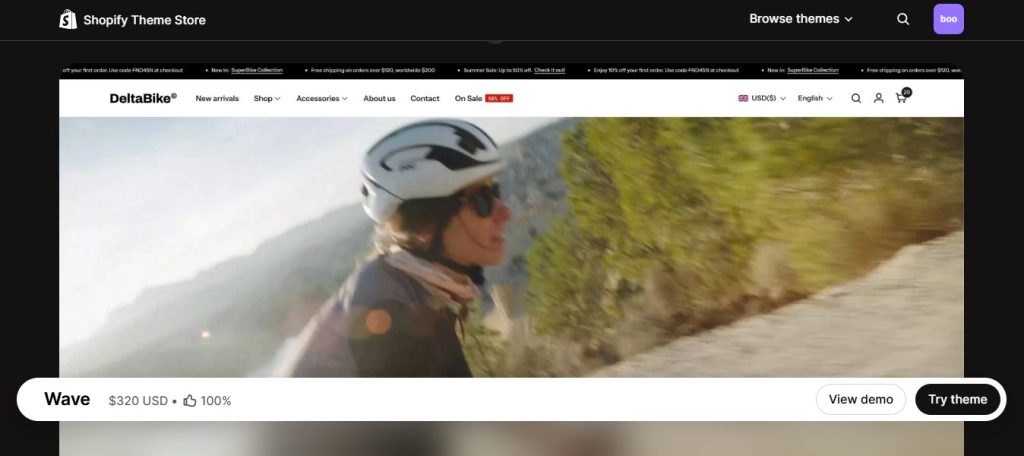
Wave is built with a performance-driven, mobile-first approach, making it a practical choice for fitness merchants whose customers frequently browse and shop from their phones. Its flexible sections and reusable blocks give merchants room to create focused landing pages for categories such as strength training, cardio, running, yoga, or home workouts, while enhanced search, filtering, mega menus, and infinite scroll help shoppers navigate the catalog.
One particularly useful feature for home gym merchants is its product bundle section. Instead of selling equipment in isolation, a store can create ready-made combinations such as a squat rack with a bench and weight plates, or pair adjustable dumbbells with resistance bands and a workout mat. This makes Wave a practical option for merchants looking to increase basket size while making it easier for customers to build a complete workout setup.
Key Features: Mobile-first design, 145+ sections, product bundles, enhanced search, filtering & sorting, mega menu, infinite scroll, quick view.
Pricing: $320 one-time payment.
Pros: Strong mobile experience; highly flexible layouts; useful bundle functionality; designed for sports brands.
Cons: A relatively new theme with a smaller track record than established themes.
Our Verdict: Wave is a solid choice for modern fitness and sports stores that want a fast, flexible storefront and a natural way to merchandise complete workout bundles. Discover our article on the fastest Shopify themes that will help boost conversion rates.
How to Choose the Right Home Gym Shopify Theme
The best Shopify theme for your store isn’t necessarily the one with the longest feature list. The right choice depends on your product range, catalog size, brand positioning, and how customers typically shop.
Consider Your Product Catalog
If you’re selling hundreds or thousands of products, prioritize strong search, filtering, collection navigation, and merchandising. Impulse, Warehouse, and Symmetry are better suited to catalog-heavy stores, while smaller stores may not need that level of complexity.
Think About How Customers Evaluate Your Products
Large equipment often requires detailed specifications, dimensions, capacity information, and product demonstrations. If showing products in action is central to your sales process, a visually driven theme such as Motion or Showcase may be a better fit.
Match the Theme to Your Brand Positioning
Your storefront should reflect the type of fitness brand you’re building. A premium equipment brand may benefit from the refined presentation of Prestige or Limitless, while a sports lifestyle brand may prefer the more content-driven approach of Focal or Showcase.
Look Beyond Large Equipment
Many fitness merchants sell more than treadmills and weight machines. If your catalog also includes activewear, yoga mats, gym accessories, resistance bands, or other workout products, consider how easily the theme can merchandise complementary products and build collections around different activities.
Don’t Overpay for Features You Won’t Use
A feature-rich premium theme isn’t automatically a better investment. If you’re just starting out with a small catalog, Dawn may provide everything you need. As your catalog and merchandising needs become more complex, upgrading to a more specialized theme can make sense.
Find out more Shopify Themes for Stores with a Small Catalog.
Ready to Build Your Home Gym Store?
A successful fitness store needs more than a good-looking storefront. When customers are buying a treadmill, squat rack, adjustable dumbbells, or even a yoga mat, they want to understand what they are getting, whether it fits their needs, and what else they may need for their workout setup. Your Shopify theme should make those decisions easier—not add another layer of friction.
As your business grows, your storefront may expand beyond equipment into fitness accessories, recovery products, activewear, or complete workout bundles. A flexible theme gives you room to add new products and collections without losing the shopping experience you’ve worked to build.
So, what does your fitness store need most right now—better product discovery, stronger visuals, a cleaner brand experience, or a more scalable catalog? Start there, and you’ll be much closer to finding the Shopify theme that’s right for your business.