
Every second your Shopify store takes to load, you lose customers. Studies show that a 1-second delay in page load time can drop your conversion rate by up to 7%. In a crowded e-commerce landscape, bloated layouts, heavy pop-ups, and slow scripts are quiet revenue killers.
That’s where minimal Shopify themes come in.
By stripping away unnecessary clutter and bloated code, a minimalist theme delivers lightning-fast page speeds, seamless mobile navigation, and a laser focus on what actually matters—your products. However, not all minimal themes are created equal; some sacrifice essential features for basic design, while others are fast only on paper.
To help you build a high-converting, lightning-fast storefront, we’ve tested and curated the best minimal Shopify themes for 2026 based on speed performance, UX design, and native sales features.
Table of Contents
What Makes a Great Minimal Shopify Theme?
When choosing a minimal Shopify theme, it’s easy to focus on aesthetics like white space, simple layouts, and clean typography. While those elements matter, they’re only part of the picture.
The best minimal Shopify themes don’t just look clean—they’re built to perform. Behind the minimalist design is a lightweight, well-optimized foundation that helps pages load faster, keeps navigation friction-free, and ultimately creates a better shopping experience.
Here are the key qualities that separate a truly great minimal Shopify theme from an average one.
Lightweight Code for Faster Performance
One of the biggest advantages of a minimal Shopify theme is speed. The best themes are built with clean, modern code that minimizes unnecessary assets and keeps page rendering fast.
Look for themes that offer:
- A smaller DOM structure to help pages render more efficiently.
- Minimal JavaScript dependencies reduce loading time, especially on mobile devices.
- Strong Core Web Vitals performance, improving both user experience and SEO.
You may be interested in exploring these fastest Shopify themes.
Built-in Features That Reduce App Dependence
Many Shopify stores become slower over time because they rely on too many third-party apps. A well-designed minimal theme includes many essential conversion features out of the box, reducing the need for additional apps.
Common built-in features include:
- Cart drawer for seamless cart updates without reloading the page.
- Quick Buy or sticky Add-to-Cart buttons that make the purchase journey smoother.
- Built-in promotional banners for highlighting offers without adding extra scripts.
Mobile-First Design
Since most online shoppers browse on their phones, mobile performance should never be an afterthought. A great minimal theme is designed with smaller screens in mind from the start.
Look for features such as:
- Touch-friendly navigation with intuitive buttons and sticky headers.
- Responsive image loading that serves appropriately sized images based on each visitor’s device.
Product-Focused Design
Minimalism isn’t about making your store look empty; it’s about helping customers focus on your products.
A good minimal theme achieves this with:
- Clean grid layouts that give product photography room to stand out.
- Clear typography hierarchy that improves readability without overwhelming the page.
Shopify Online Store 2.0 Compatibility
Finally, make sure the theme fully supports Shopify Online Store 2.0. This gives you greater flexibility to customize your store without relying on custom code.
Key capabilities include:
- Drag-and-drop sections that make it easy to customize pages throughout your store.
- App blocks that integrate essential apps more cleanly while helping preserve theme performance.
Ultimately, a great minimal Shopify theme is more than a clean design. It combines speed, usability, flexibility, and built-in conversion features to create a shopping experience that’s better for customers and easier for merchants to manage.
10+ Best Minimal Shopify Themes For Maximum Conversions
Every theme listed below has been handpicked based on three non-negotiable criteria: a lightweight codebase for lightning-fast load times, a clutter-free interface that puts your products front and center, and built-in sales features designed to maximize conversions.
Quick Summary
| Theme Name | Best For | Price | Key Feature |
| Neat | Speed & conversion optimization | $150 | 90+ PageSpeed & built-in upsells |
| Blum | Mobile-first fashion & beauty | $170 | Ultra-fast mobile performance |
| Minimalista | Luxury brands & editorial layouts | $380 | Dark mode & high-end typography |
| Broadcast | High-volume stores boosting AOV | $420 | 1-click buy & cross-selling tools |
| Impulse | Large catalogs & sales promotions | $380 | Multi-tag filters & promo tiles |
| Be Yours | One-product & small catalog stores | $320 | Cart progress bars & countdowns |
| Focal | Visual-heavy & lifestyle brands | $380 | Interactive hotspots & color swatches |
| Dawn | General stores wanting max speed | Free | Lightweight OS 2.0 default |
| Craft | Artisanal goods & boutique decor | Free | Spacious grid & rich typography |
| Sense | Beauty & wellness products | Free | Visual storytelling & detail blocks |
| Origin | Independent makers & crafters | Free | Story-focused quirky design |
| Publisher | Books, art prints & creative goods | Free | High-contrast bold typography |
Premium Minimal Shopify Themes
If you’re looking for a more polished take on minimalism, the premium options below are worth a closer look. These premium Shopify themes offer refined designs, thoughtful layouts, and additional features that can give your store a more distinctive and professional feel. Here are some of the standout options to consider.
1. Neat – Fastest Minimalist Shopify Theme with Built-in Upsells
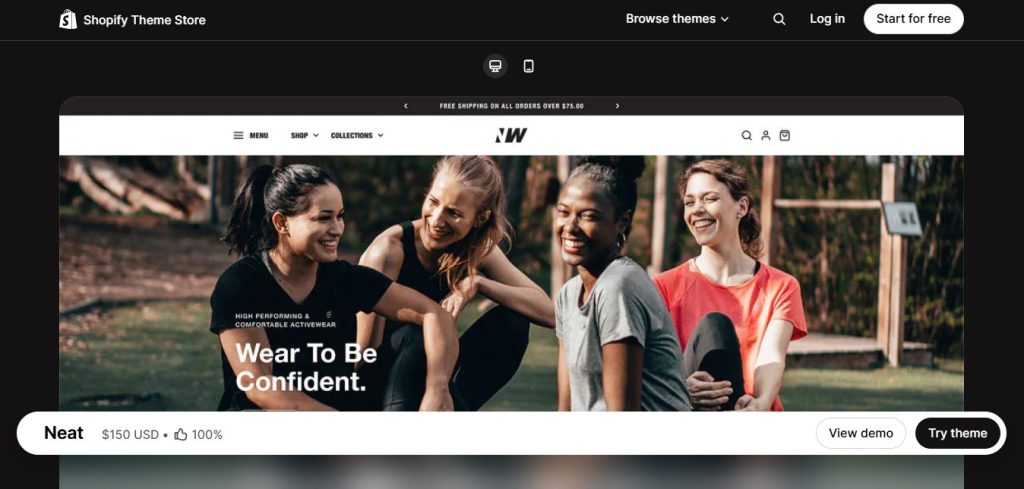
If you want to keep your tech stack lean, Neat is one of the strongest minimal Shopify theme options available. It proves that you don’t have to sacrifice conversion-focused features to maintain excellent performance. It’s engineered specifically as a direct replacement for 3 to 5 paid Shopify apps, keeping your site fast while scaling revenue.
- The Unfair Advantage: Built-in Sales Funnel without App Bloat.
- Standout USP: Native In-Cart Upsells. While most themes rely on heavy third-party cart apps that slow down checkout, Neat embeds dynamic product recommendations and progress bars directly into its core code.
- Key Highlights: Built-in Slide-out Cart, Sticky Add-to-Cart, Instant Page Preloading, Native Cross-selling.
2. Blum – Mobile-First Minimal Shopify Theme for Fashion & Beauty
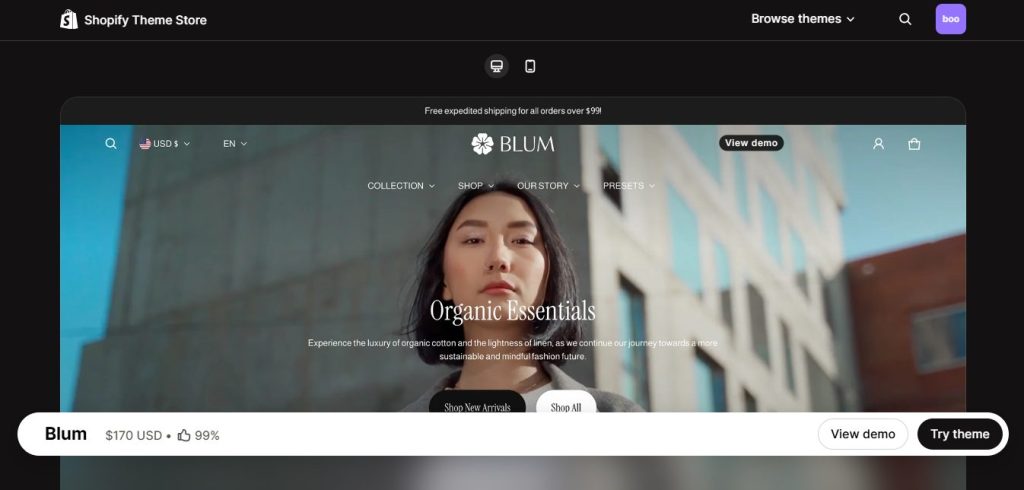
Few minimal Shopify themes prioritize mobile interactions as much as Blum. Every part of the experience is designed to feel smooth and responsive on smartphones. It focuses on fluid touch responsiveness and zero-lag scrolling for image-heavy storefronts.
- The Unfair Advantage: High-FPS Mobile Performance for Visual Brands.
- Standout USP: Adaptive Image Processing. High-resolution lookbooks usually kill mobile page speed. Blum solves this by dynamically serving exact-fit image sizes based on the buyer’s screen resolution.
- Key Highlights: Mobile-first touch gestures, adaptive image rendering, seamless video hero sections, low-latency mobile navigation.
3. Minimalista – Luxury Minimalist Shopify Theme with Dark Mode
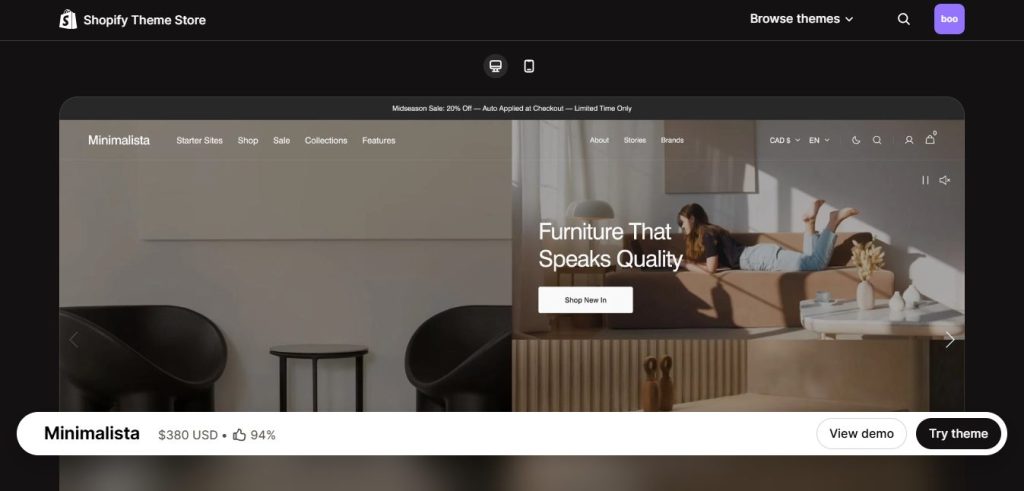
For brands where presentation matters as much as the products themselves, Minimalista delivers a refined editorial shopping experience inspired by luxury magazines. It uses dramatic framing and intentional contrast to make products look instantly more valuable.
- The Unfair Advantage: Editorial High-Fashion Layout with Native Dark Mode.
- Standout USP: Seamless Light/Dark Mode Toggle. It offers an effortless dark aesthetic transition, allowing luxury jewelry or clothing brands to create a moody, modern vibe without writing custom CSS scripts.
- Key Highlights: Native Dark Mode toggle, editorial typography layouts, subtle scroll-triggered animations, high-contrast borders.
4. Broadcast – High-Conversion Minimal Shopify Theme for Scaling Stores
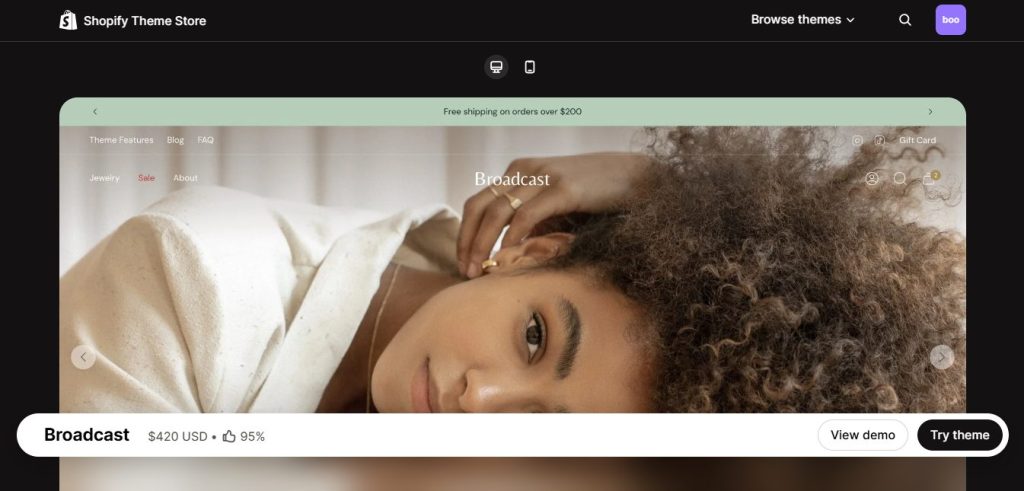
Broadcast is a great example of how a Shopify theme can stay visually minimal while still supporting sophisticated merchandising and sales features. It combines a refined, uncluttered design language with one of the most powerful native sales engines in the Shopify ecosystem.
- The Unfair Advantage: Invisible Enterprise Sales Features.
- Standout USP: Frictionless 1-Click Purchase Paths. Features like quick buy drawers and cross-sell popups are built subtly beneath the surface, ensuring buyers never feel bombarded by ads or promos.
- Key Highlights: 1-Click Quick Buy, built-in cross-sell drawer, rich media storytelling blocks, robust collection filters.
5. Impulse – Best Minimal Shopify Theme for Large Catalogs
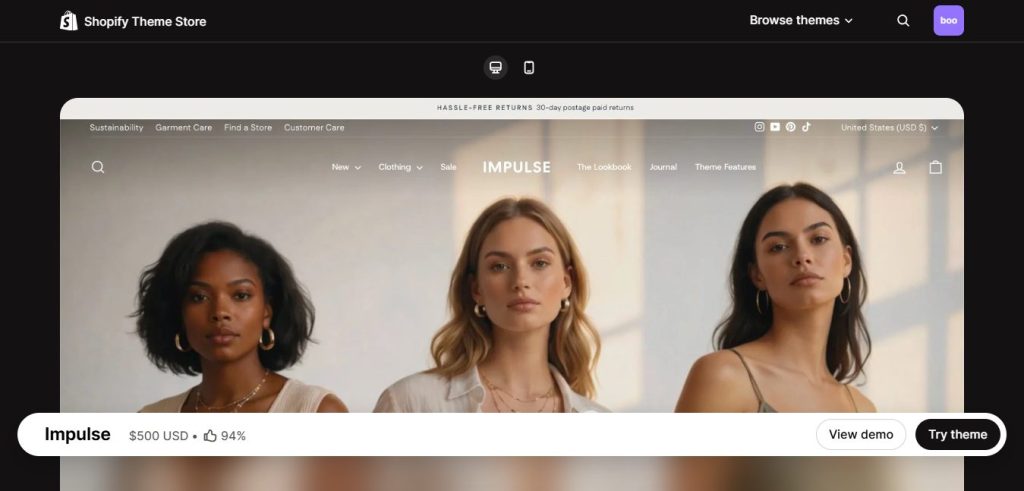
Large product catalogs often become difficult to browse, but Impulse is built to keep even extensive inventories organized and easy to explore. Its flexible collection layouts help merchants showcase thousands of products without making the shopping experience feel overwhelming.
- The Unfair Advantage: Masterclass Organization for Massive Catalogs.
- Standout USP: Multi-Tag Sub-Collection Filtering. Allows buyers to drill down through thousands of SKUs instantly without triggering full page reloads.
- Key Highlights: Multi-tag sub-collection filters, versatile promo tiles, customizable collection header banners, flash sale timers.
6. Be Yours – Minimal One-Product Shopify Theme for Dropshipping
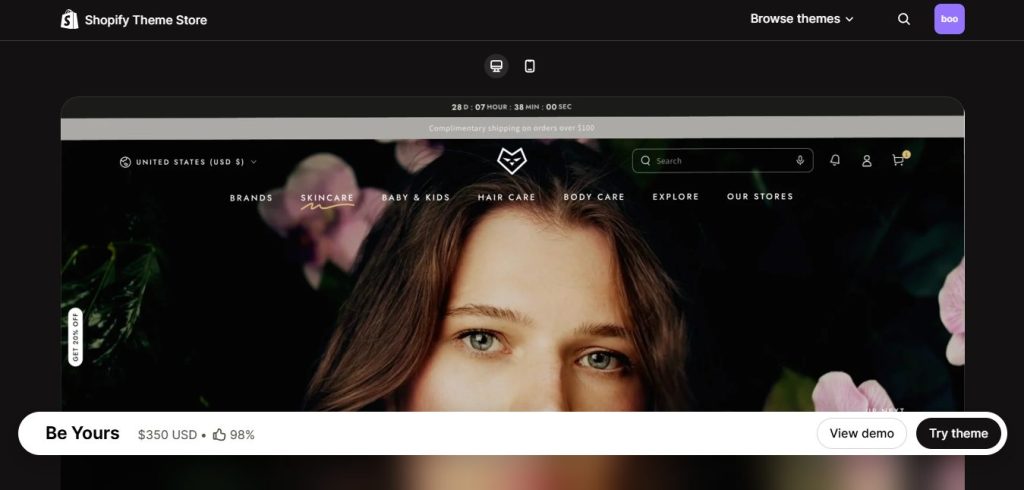
If you’re selling a single product or a tightly curated collection, Be Yours is designed to keep every visitor focused on one conversion journey. Every section is built to reduce distractions and move shoppers naturally toward checkout.
- The Unfair Advantage: High-Conversion Architecture for Single-Product Funnels.
- Standout USP: Subtle Urgency Triggers. Built-in tools like shipping progress bars and stock countdowns are designed with a minimalist touch, giving you sales triggers without making the site look spammy.
- Key Highlights: Cart countdown timers, threshold progress bars, multi-column product landing pages, fast checkout drawers.
7. Focal – Interactive Visual Minimal Shopify Theme for Lifestyle Brands
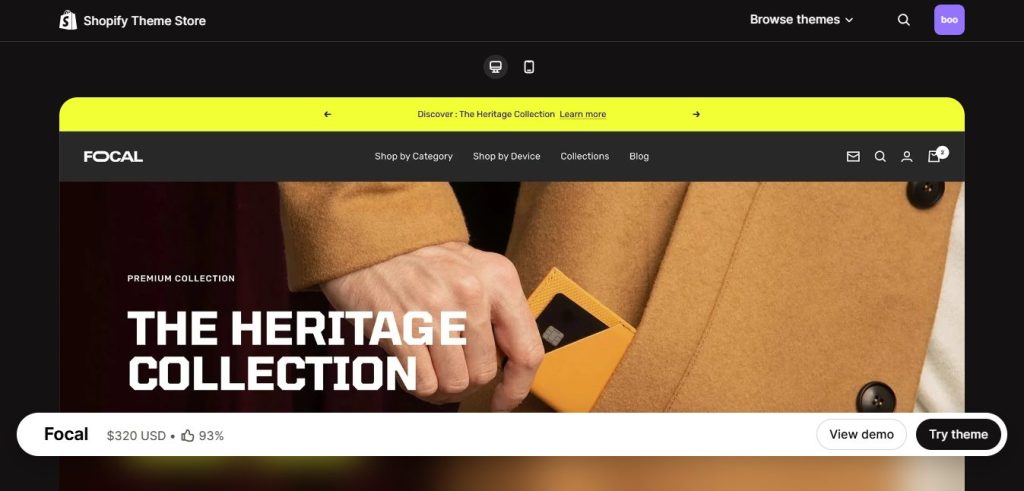
Instead of relying on lengthy product descriptions, Focal lets visuals do the selling through clean layouts and interactive shopping experiences. It’s an excellent fit for brands with strong photography and lifestyle-focused marketing.
- The Unfair Advantage: Interactive Shoppable Lookbooks.
- Standout USP: Shoppable Hotspots. Lets customers discover and purchase products directly from lifestyle lookbook images with a single tap.
- Key Highlights: Interactive image hotspots, dynamic color swatches, smooth infinite scroll, hero media sections.
Free Minimal Shopify Themes
8. Dawn – Best Free Minimalist Shopify Theme for Speed
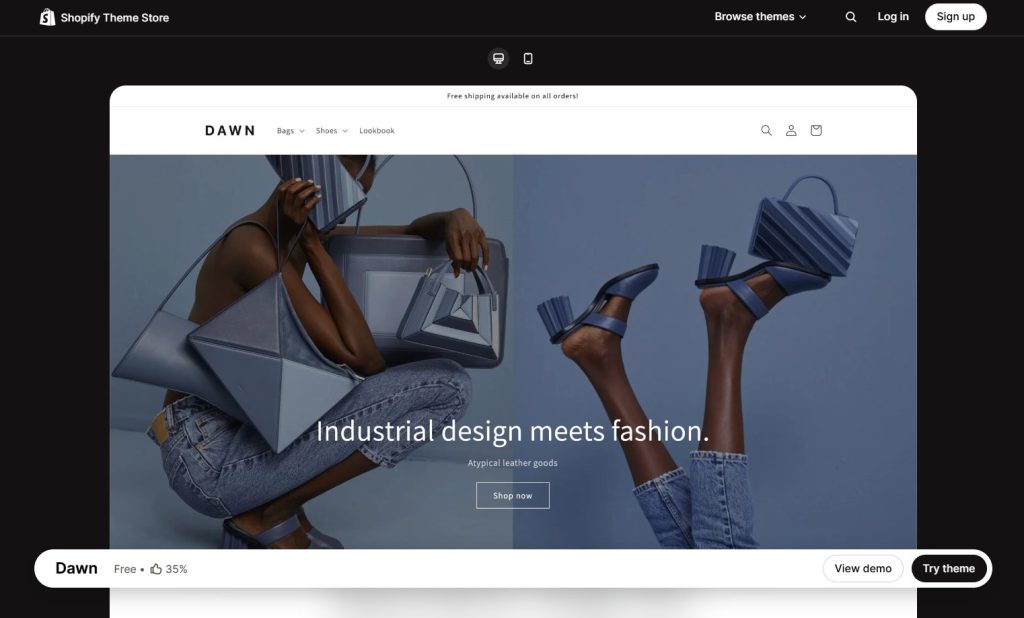
As Shopify’s official reference theme, Dawn sets the benchmark for what a fast, lightweight Online Store 2.0 theme should look like. It provides a clean foundation that merchants can customize without sacrificing performance.
- The Unfair Advantage: Pure Native OS 2.0 Codebase.
- Standout USP: Zero External Dependencies. Dawn replaces heavy JavaScript libraries with native browser features, making it the cleanest baseline theme available.
- Key Highlights: Native OS 2.0 section rendering, media-first product grids, flexible drag-and-drop blocks, ultra-light JS footprint.
9. Craft – Free Minimal Shopify Theme for Artisanal & Handmade Goods
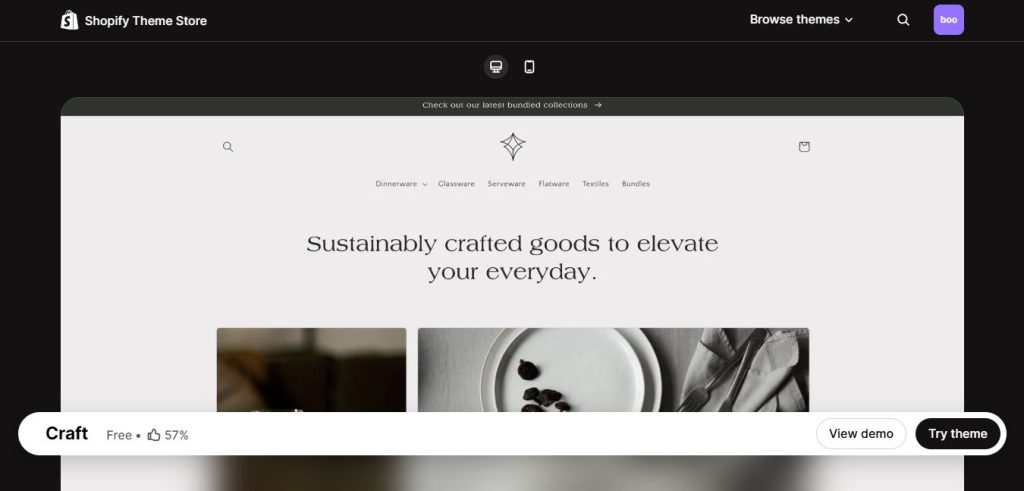
Craft is built for merchants who want their products—not flashy design elements—to tell the story. Its clean layouts, generous white space, and understated styling naturally highlight craftsmanship and premium materials. The result is a storefront that feels authentic, refined, and focused on the quality behind every product.
- The Unfair Advantage: Spacious Grid Alignment for Artisanal Storytelling.
- Standout USP: Editorial Serif Typography. Uses generous white space and elegant font pairings to let the subtle details of artisanal products stand out naturally.
- Key Highlights: Generous negative space grids, rich serif typography options, custom narrative callouts, subtle image borders.
10. Sense – Free Clean Shopify Theme for Skincare & Wellness
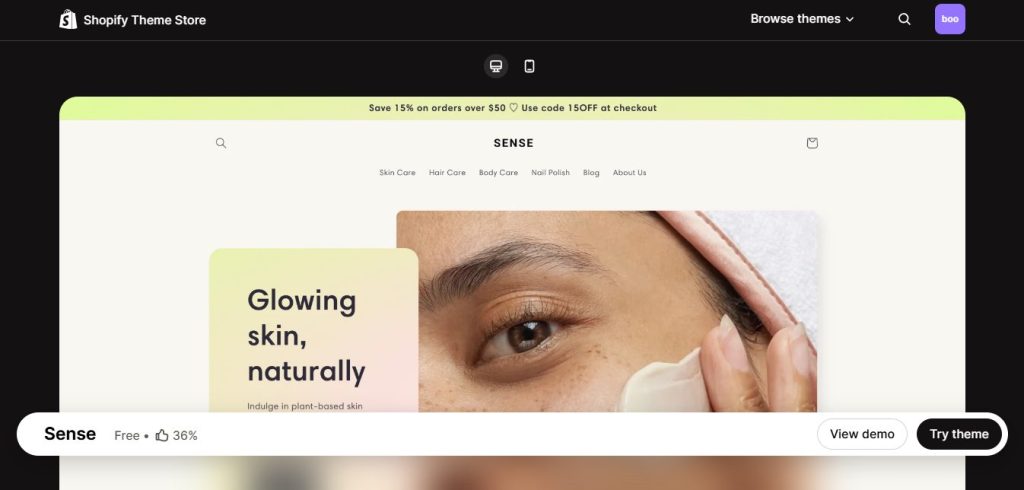
Sense strikes a balance between minimal design and informative product presentation, making it especially well suited to brands that rely on education and trust. Its clean visual hierarchy helps explain product benefits without overwhelming shoppers.
- The Unfair Advantage: Soft Visual Cards for Product Education.
- Standout USP: Ingredient & Feature Callout Cards. Structured blocks allow health and beauty brands to explain complex product benefits cleanly without cluttering the page layout.
- Key Highlights: Dedicated benefit callout cards, soft rounded UI elements, advanced product detail tabs, clean navigation menus.
11. Origin – Free Simple Shopify Theme for Independent Makers
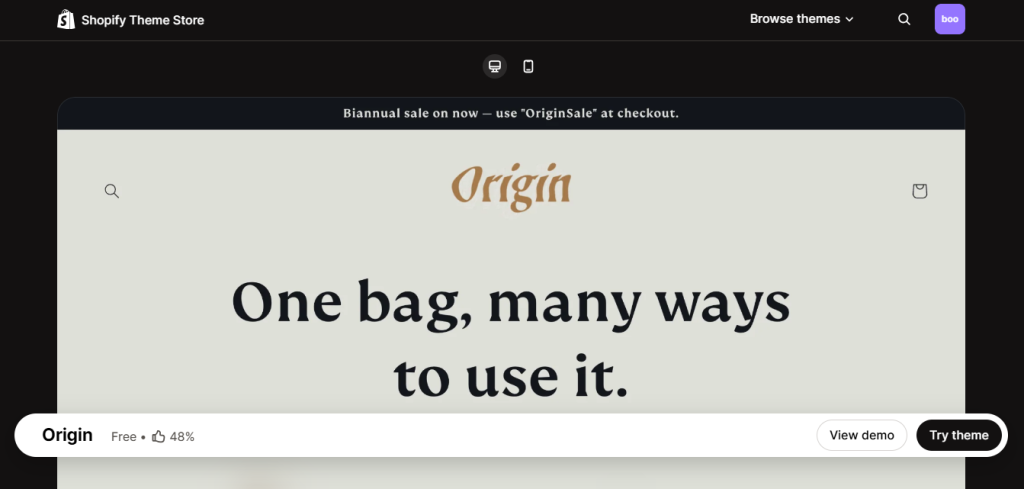
Origin feels less like a traditional online store and more like a personal studio, making it a natural fit for independent creators and makers. Its minimalist structure encourages visitors to connect with the story behind every product.
- The Unfair Advantage: Centered Layout for Single-Item Creators.
- Standout USP: Story-First Homepage Funnel. It pairs quirky, minimalist headers with a centered layout that naturally draws the reader into the creator’s backstory before showing price tags.
- Key Highlights: Centered layout structure, bespoke typography headers, integrated storytelling sections, minimalist product showcase.
12. Publisher – Free Avant-Garde Minimal Shopify Theme for Creative Goods
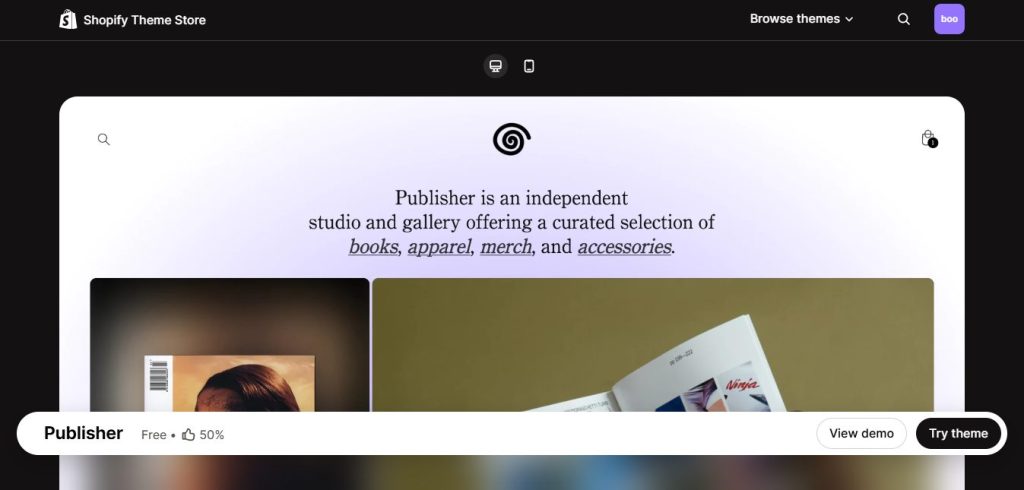
Publisher breaks away from conventional storefront design with a bold editorial style inspired by independent magazines, art books, and creative publications. Rather than relying on decorative elements, it uses striking typography, generous spacing, and carefully balanced layouts to create visual impact. Despite its distinctive aesthetic, the theme remains clean, easy to navigate, and focused on showcasing creative products without unnecessary distractions.
- The Unfair Advantage: High-Contrast Aesthetic for Creative Goods.
- Standout USP: Dramatic Dark-Grid Contrast. Uses bold headers, heavy borders, and high-contrast dark backgrounds to give creative goods an edgy look without adding visual bloat.
- Key Highlights: High-contrast dark layouts, bold typography hierarchies, image-heavy minimalist grids, sleek context menus.
How to Choose the Right Minimal Theme for Your Store
Choosing a minimal theme isn’t just about picking the prettiest demo. A theme that works wonders for a 3-product skincare brand can completely ruin the shopping experience for a fashion store with 500 SKUs.
To avoid wasting time and money on theme switches later, use this 4-step decision framework to pick the right one from day one:
Match the Theme to Your Catalog Size & Structure
Minimalism handles inventory differently. Pick a layout built for your volume:
- 1 to 10 Products (Niche/ Single Product Stores): You need a theme with strong landing page capabilities and rich product storytelling sections. Go for: Be Yours (Premium) or Origin (Free).
- 10 to 50 Products (Boutiques & Specialty Brands): Look for clean grid layouts that give every product breathing room without requiring complex filtering. Go for: Neat / Blum (Premium) or Craft / Sense (Free).
- 100+ Products (Large Catalogs & Apparel): Minimalism here means navigation efficiency. You need heavy-duty multi-tag filters, mega menus, and sticky collection sidebars, so buyers don’t get lost. Go for: Impulse or Broadcast (Premium).
Audit Your “App Dependency” vs. Native Features
Before buying a $300+ theme or choosing a free one, list the apps you currently pay for (or plan to install).
The Golden Rule: Every third-party app script adds ~0.2 to 0.5 seconds to your load time.
If you need features like Slide-out Cart Upsells, Sticky Add-to-Cart, Color Swatches, or Stock Countdowns:
- Option A: Choose a feature-rich minimal theme like Neat or Broadcast. You pay more upfront for the theme, but you save $30–$80/month in app subscription fees and keep your site significantly faster.
- Option B: Choose a lightweight free theme like Dawn, but keep your app installs strictly under 3–5 essential apps.
Check Your Content & Photography Assets
Minimal themes rely heavily on visual negative space. This means your photography is your design.
- If you have high-end custom photos/videos: Pick themes with large hero banners, editorial framing, and dark modes (e.g., Minimalista, Focal, or Publisher).
- If you only have basic supplier/clean white background photos: Avoid heavy editorial themes. Stick to structured, functional minimal grids that don’t look empty without lifestyle photography (e.g., Dawn or Craft).
Know Where Your Traffic Comes From
- 80%+ Social Media Traffic (Instagram, TikTok, FB Ads): Your buyers are on mobile phones and have zero patience. Prioritize themes built with a mobile-first architecture and instant touch responsiveness (e.g., Blum or Neat).
- Search / Organic / Desktop Traffic: Focus on themes with rich header navigation, megamenus, and clear breadcrumbs (e.g., Impulse or Sense).
Quick Decision Matrix
- “I want maximum speed on a zero budget”: Pick Dawn.
- “I want to increase my average order value without buying 5 apps”: Pick Neat.
- “I sell fashion/beauty, and most buyers are on mobile”: Pick Blum.
- “I have a large inventory with frequent sales”: Pick Impulse.
Bonus: 5 Tips to Keep Your Shopify Store Truly Minimalist
Choosing a fast, clean minimal theme is only half the battle. As your business grows, it’s remarkably easy to clutter your store with pop-ups, promotional banners, and dozens of third-party apps, undoing all the performance and design benefits of your minimalist foundation.
Here are 5 actionable rules to keep your Shopify store lean, fast, and high-converting over the long haul:
1. Enforce the “One-App-In, One-App-Out” Rule
The biggest enemy of a minimal store is app clutter. Unused apps leave behind ghost scripts that drag down your PageSpeed scores and clutter your user interface.
- The Rule: Before installing a new app for a single feature (e.g., a spin-to-win wheel or social proof pop-up), check if your theme already supports it natively.
- Pro Tip: Audit your app list every quarter and delete anything that hasn’t directly contributed to sales or conversion rate.
2. Standardize Your Product Photography
In a minimalist design, white space amplifies everything—especially your images. Inconsistent product photos will make a clean theme look chaotic instantly.
- Use Uniform Aspect Ratios: Stick strictly to one aspect ratio (e.g., 1:1 square or 4:5 vertical) across all product cards.
- Consistent Backgrounds & Lighting: Keep backgrounds neutral (pure white, soft gray, or uniform studio tone) so product grids look organized and seamless.
3. Restrain Your Color Palette (The 60-30-10 Rule)
Minimalism isn’t about removing color entirely; it’s about controlling visual hierarchy. Avoid using 5 or 6 different accent colors for buttons, badges, and sale banners.
- 60% Primary Base: Background and negative space (usually clean white or soft light gray).
- 30% Secondary Color: Main text, headers, and navigation elements.
- 10% Accent Color: Reserved strictly for primary Call-to-Action (CTA) buttons like Add to Cart and Buy Now.
4. Kill the Pop-Up Overload
Nothing ruins a smooth, minimalist user experience faster than a barrage of pop-ups the second a visitor lands on your homepage.
- Delay Email Capture: Instead of showing a newsletter pop-up immediately upon entry, trigger it only after a visitor has scrolled 50% of the page or spent at least 15 seconds on site.
- Never Stacking Widgets: Avoid having a chat widget, a cookie consent bar, and a discount pop-up all overlapping on a small smartphone screen.
5. Streamline Navigation & Footer Links
Minimalist stores make finding products effortless by stripping away unnecessary menu items.
- Header Menu: Cap your main header navigation at 4 to 6 items maximum. Use mega menus only if you have a massive product catalog.
- Footer Cleanup: Move administrative links (Privacy Policy, Terms of Service, Shipping Info, FAQ) entirely to the footer so your main header stays focused purely on shopping categories.
FAQs
Why is my site still slow even with a minimal theme?
A minimal theme provides a lightweight codebase, but it is only half of the speed equation. Over 80% of speed drops happen after theme installation due to three common factors:
- Ghost App Scripts: Uninstalling an app from your Shopify admin doesn’t automatically purge its code snippets from your theme files. These leftover scripts continue running in the background, making hidden network requests.
- Uncompressed Media: Uploading raw 3MB–5MB PNG or JPEG files instead of optimized WebP images will crush any theme’s performance, regardless of how clean its code is.
- Tracking Pixel Overload: Running multiple ad pixels (Facebook, TikTok, Pinterest) and analytics tools simultaneously without asynchronous loading triggers script blocking, dragging down your Google PageSpeed scores.
Is it better to buy a $300+ Premium Minimal Theme or use a Free Theme (Dawn) + Paid Apps?
It comes down to Long-Term Math and Code Cleanliness:
- Free Theme + 4 Apps: Free Theme ($0) + Cart Upsell App ($20/mo) + Sticky Cart App ($10/mo) + Color Swatch App ($10/mo) = ~$480/year recurring + slower load speeds due to 4 extra app script requests.
- Premium Minimal Theme (e.g., Neat, Broadcast): ~$280–$380 one-time payment with native upsells, sticky carts, and swatches built directly into the core code = $0/year ongoing + lightning-fast native speed.
- Verdict: If you plan to operate your store for more than 6 months, a feature-rich premium minimal theme is almost always cheaper and faster.
Can a minimal theme handle a large catalog with 500+ SKUs without looking messy?
Yes, but only if the theme includes multi-level native filtering. Free minimal themes like Dawn or Craft struggle with 500+ SKUs because their default collection pages require endless scrolling. If you have a large catalog, you must choose a minimal theme specifically built for large inventories (like Impulse or Broadcast). Look for features like sticky sidebar filtering, multi-tag AJAX filters, and mega-menus so buyers can find products in 2 clicks without feeling overwhelmed.
How do I add essential trust signals (reviews, badges, security) without ruining the minimal aesthetic?
The secret is Visual Integration:
- Ditch brightly colored badges: Avoid installing 3rd-party trust badge apps that dump rainbow-colored “100% Safe Checkout” graphics under your CTA buttons. They look spammy and lower conversion rates.
- Use monochrome/native micro-icons: Use clean, single-color SVG icons for features like “Free Shipping” or “30-Day Returns”.
- Minimalist Reviews: Choose review apps (like Judge.me or Loox) that allow you to customize star colors to match your theme’s accent palette (e.g., subtle black/gray stars instead of bright yellow stars).
In Conclusion,
Choosing the right minimal Shopify theme isn’t just about creating a clean-looking storefront. The best themes combine speed, usability, and built-in conversion features to deliver a shopping experience that’s fast, intuitive, and focused on your products.
If you’re still deciding, here are a few standout picks:
- Best Free Theme: Dawn — A lightweight, flexible foundation that’s ideal for new stores and merchants on a budget.
- Best for Speed & Conversions: Neat — Combines built-in sales features with a lean codebase, reducing the need for third-party apps.
- Best for Mobile-First Brands: Blum — Designed to deliver a smooth browsing experience with responsive images and touch-friendly interactions.
- Best for Large Catalogs: Impulse or Broadcast — Excellent choices for stores managing extensive product ranges while maintaining a clean, organized shopping experience.
Ultimately, your theme is only one part of building a high-converting Shopify store. Pair it with consistent product photography, a streamlined app stack, and a user-friendly store layout to create an experience that not only looks minimal but also performs exceptionally well.